Marque and model history: ‘The Best Car in the World’ – nobody else in
automotive
history could consistently lay claim to such a rich tag as Rolls-Royce. Sir Henry Royce’s strong
engineer prowess reflected in his beautifully built automobiles, winning major reliability
trials at
their time. Soon after the Silver Ghost was launched in 1906, owning a Rolls-Royce was seen as
the
ultimate status symbol, and a sign that one has arrived. Naturally it was the car of choice for
royalty and aristocrats across the world, with India being no exception. By 1922 Rolls-Royce
introduced a smaller model, the 20hp as an attempt to cater to new markets and combat the slump
for
larger cars. With an all new chassis design, the cars were bodied by a coachbuilder of the
buyers
choice as was the norm.
In the days of the British Raj, many large and small royal states and principalities flourished,
and
everyone wanted a Rolls-Royce in their garages. The first to do so was Gwalior in 1907, and soon
others followed, ordering bespoke customized cars.
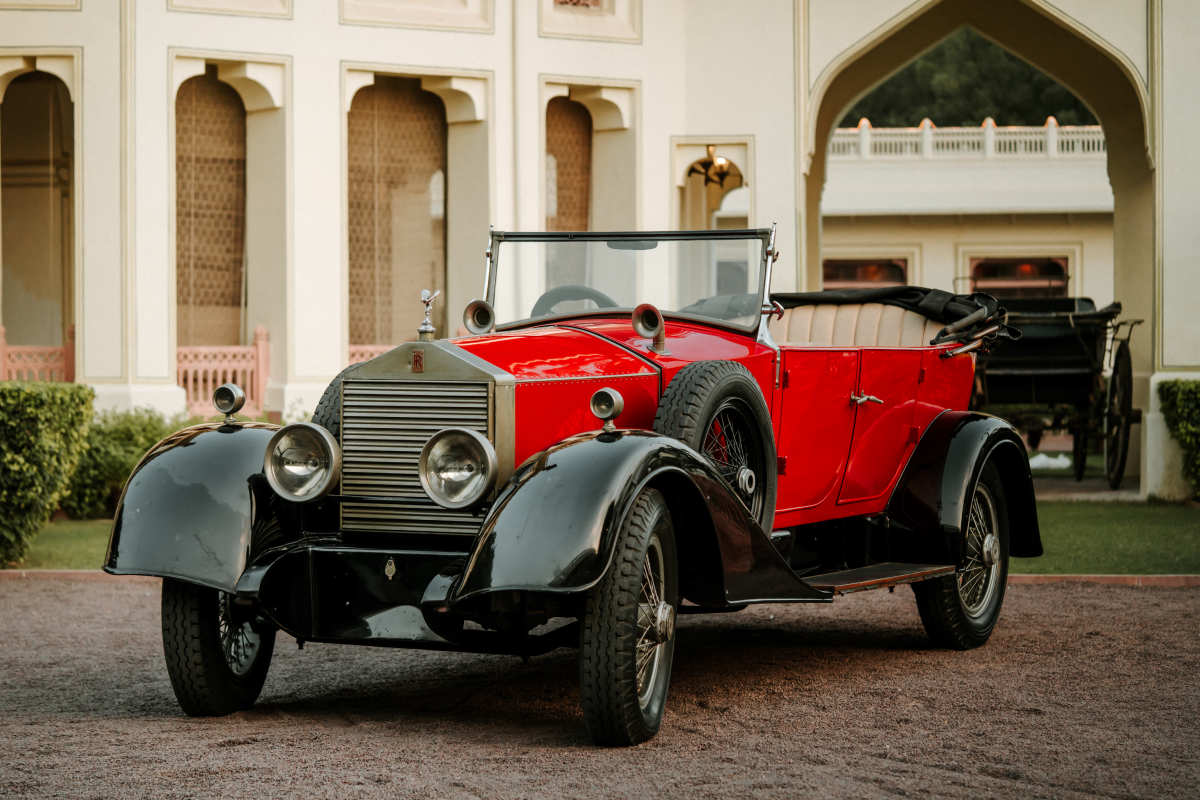
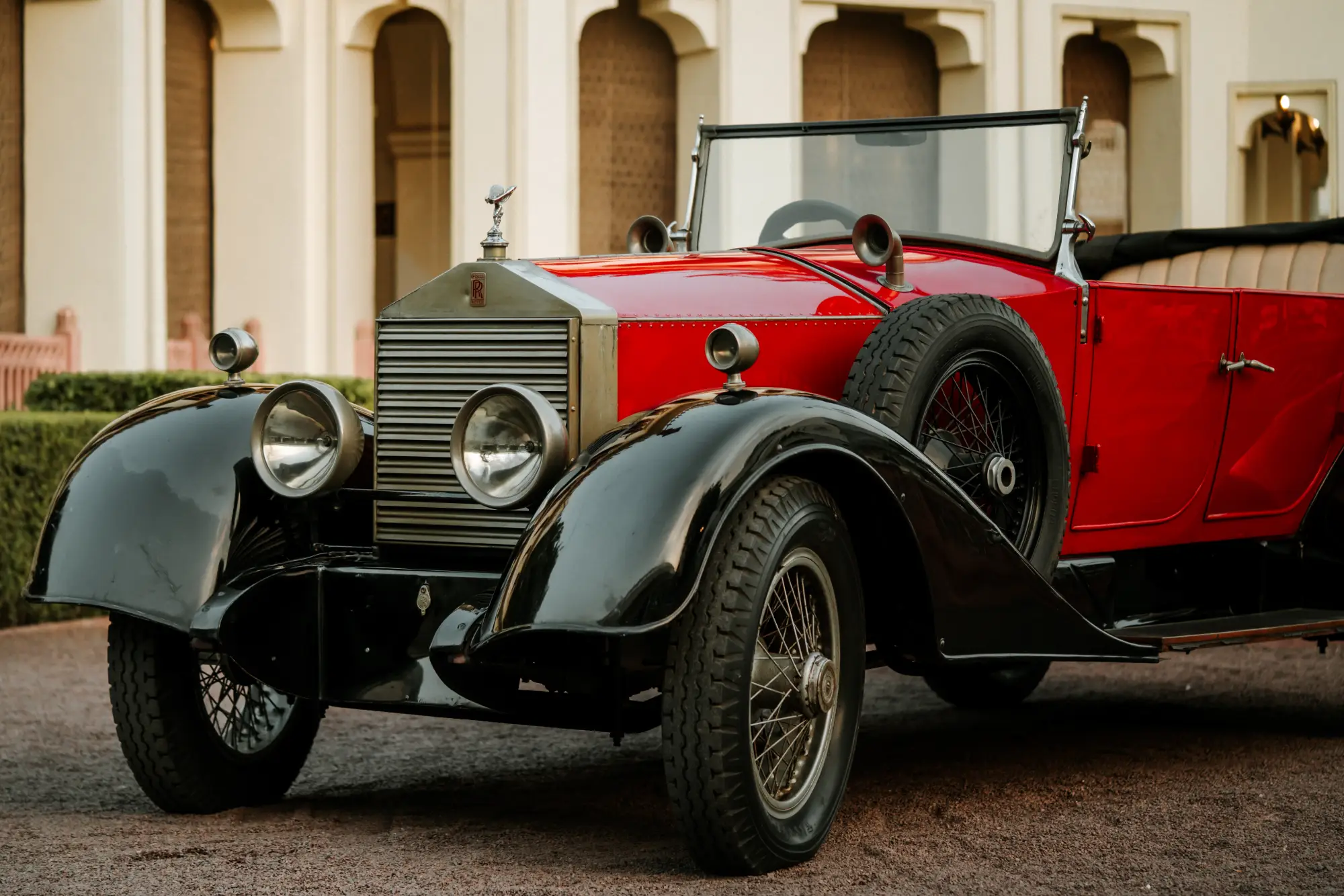
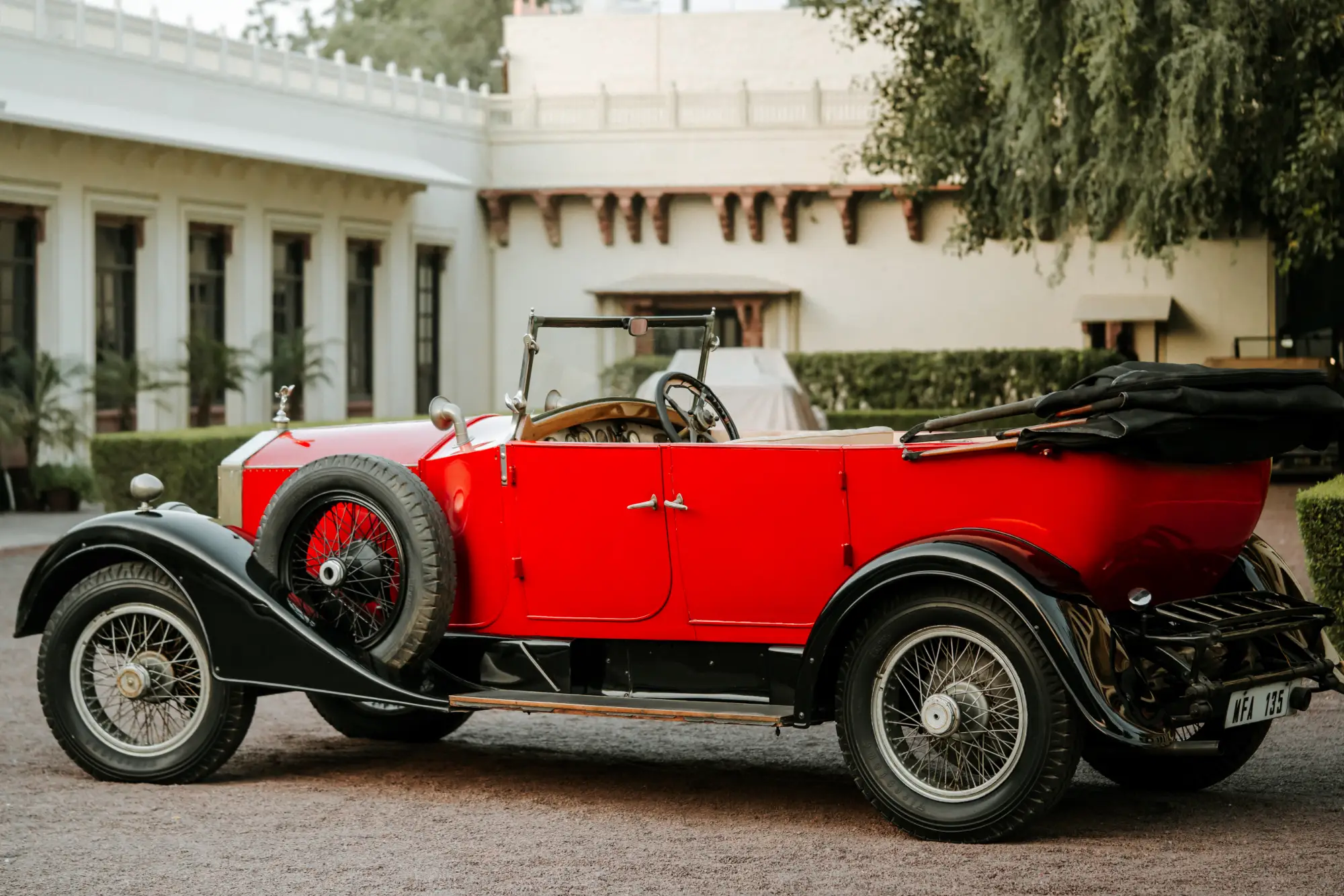
Provenance: This car was owned by the Maharaja of Mayurbhanj. It originally
carried
a Barker Landaulette body, later rebodied to a conventional 4 door open tourer.
Inline 6-cylinder 3.1 litre overhead valve
Four door Tourer
3-speed manual
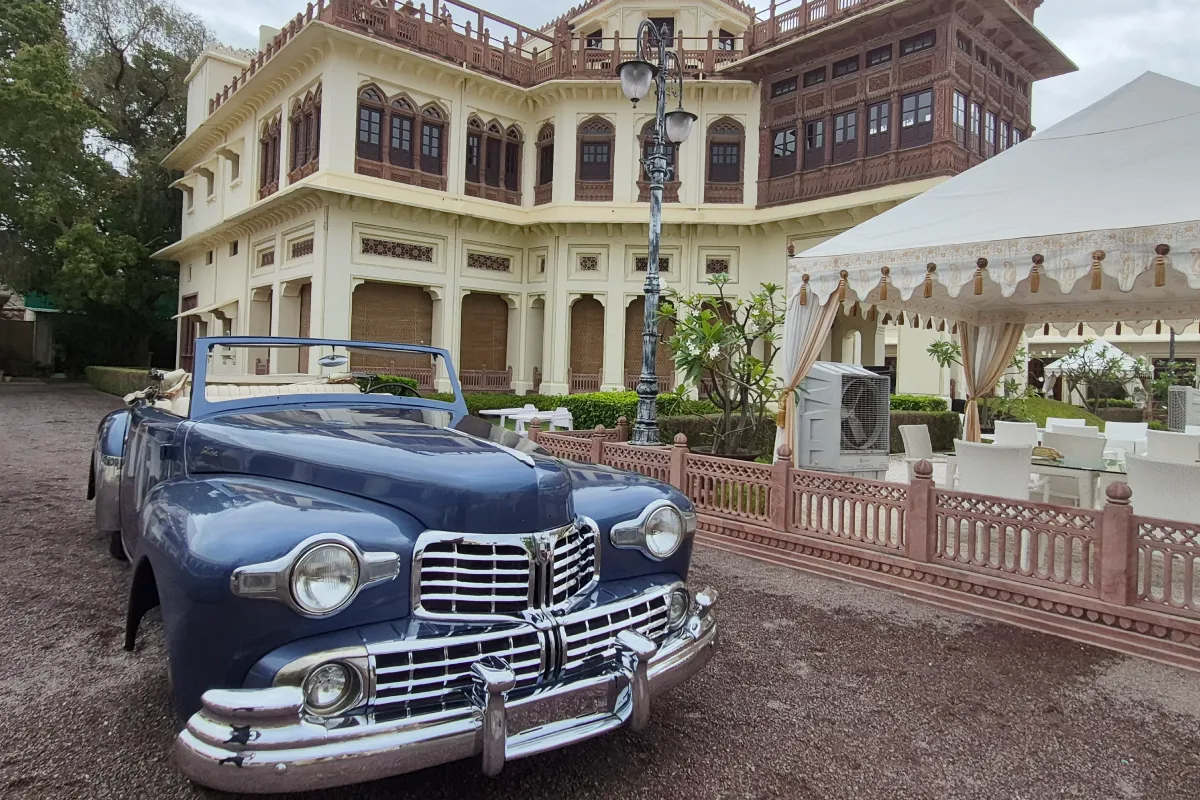
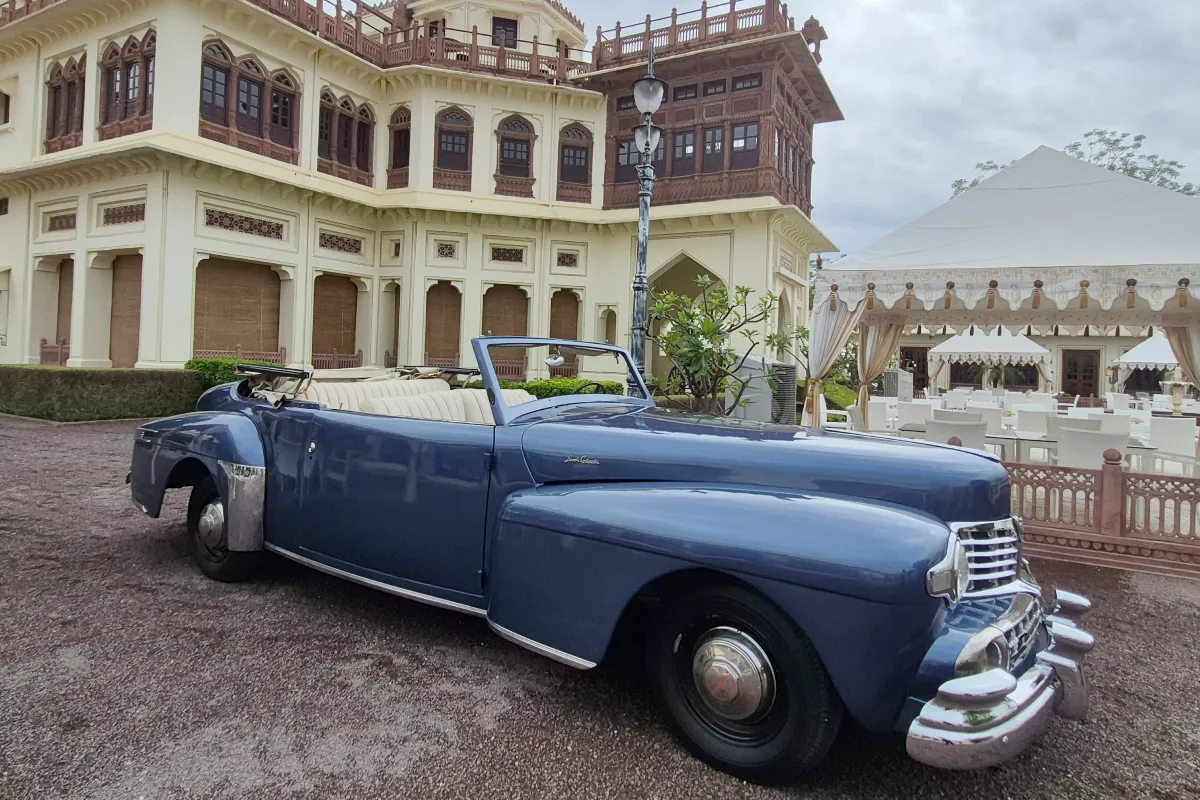
Marque and model history: The Lincoln Motors Company was founded in 1917, and
named
to honour Abraham Lincoln. Early on it was acquired by the Ford Motor Company where top boss
Edsel
Ford insisted it be positioned as the flagship luxury brand. Edsel got himself a one-off custom
car
designed by Bob Gregoire, and the response was so tremendous that the green signal was given to
put
the car into production. Thus was born the Lincoln Continental in 1940.
In 1946 a revised iteration of the Continental was introduced, this time under the guidance of
the
famed designer Raymond Loewy. The lines were an instant hit, and the car would soon go down in
history as an American icon.
V12-cylinder 4.8 litre side valve
Two door Convertible
3-speed manual
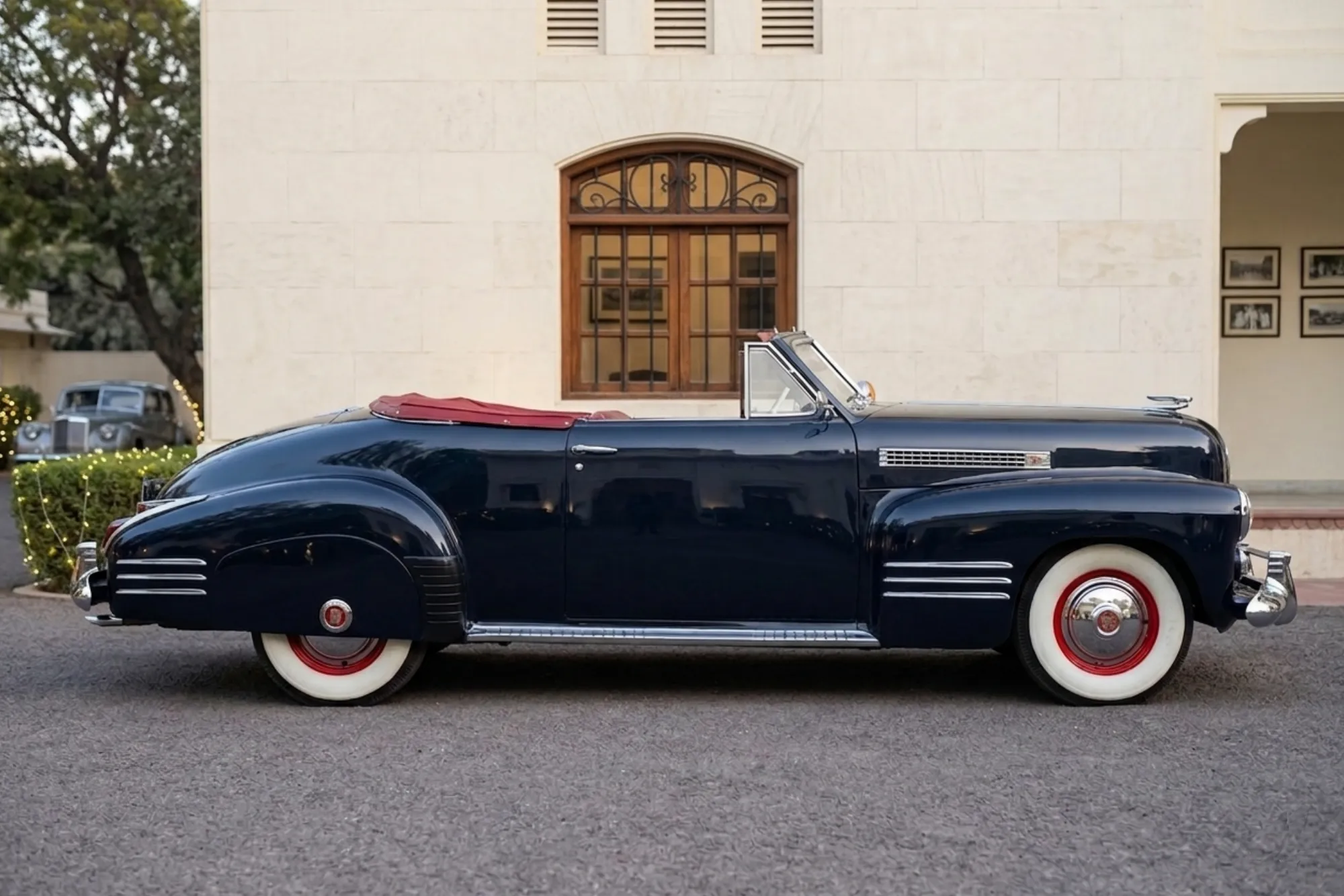
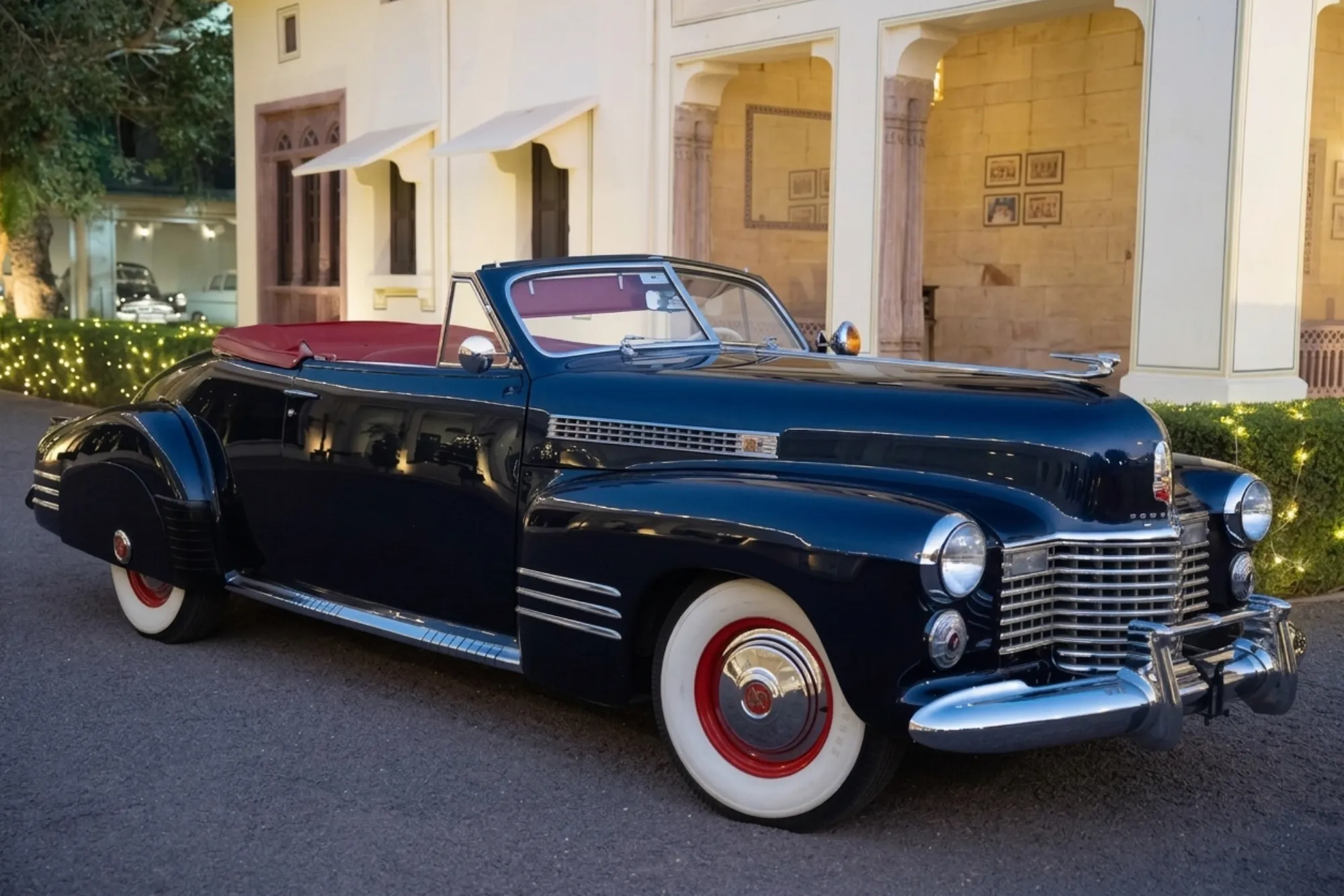
Marque and model history: With LaSalle gone for 1941, Cadillac became a
one-make, one-engine division of General Motors. For the first time since 1926, all Cadillac
products used the same engine: a 346-cubic-inch, L-head V-8 producing 150 hp, accompanied by a
semi-floating rear axle and four-wheel hydraulic brakes.
Aesthetically, some consider 1941 the highpoint in Cadillac design—the car is a visual
masterpiece of subtle, flowing curves; headlights were fully integrated into the front fenders,
and a horizontal-theme grille stretched from side to side. The hood was made front-opening for
the first time, and the gas tank filler was hidden in the left rear taillight, a feature that
soon became a Cadillac hallmark. This Cadillac Series 62 Convertible Coupe is a magnificent
representative of American luxury and style from the 1940s.
V8 (Cadillac flathead V8, ~346 cu in / 5.7L)
Convertible Coupe
Manual (3-speed manual was standard; optional
Hydra-Matic automatic if specified)
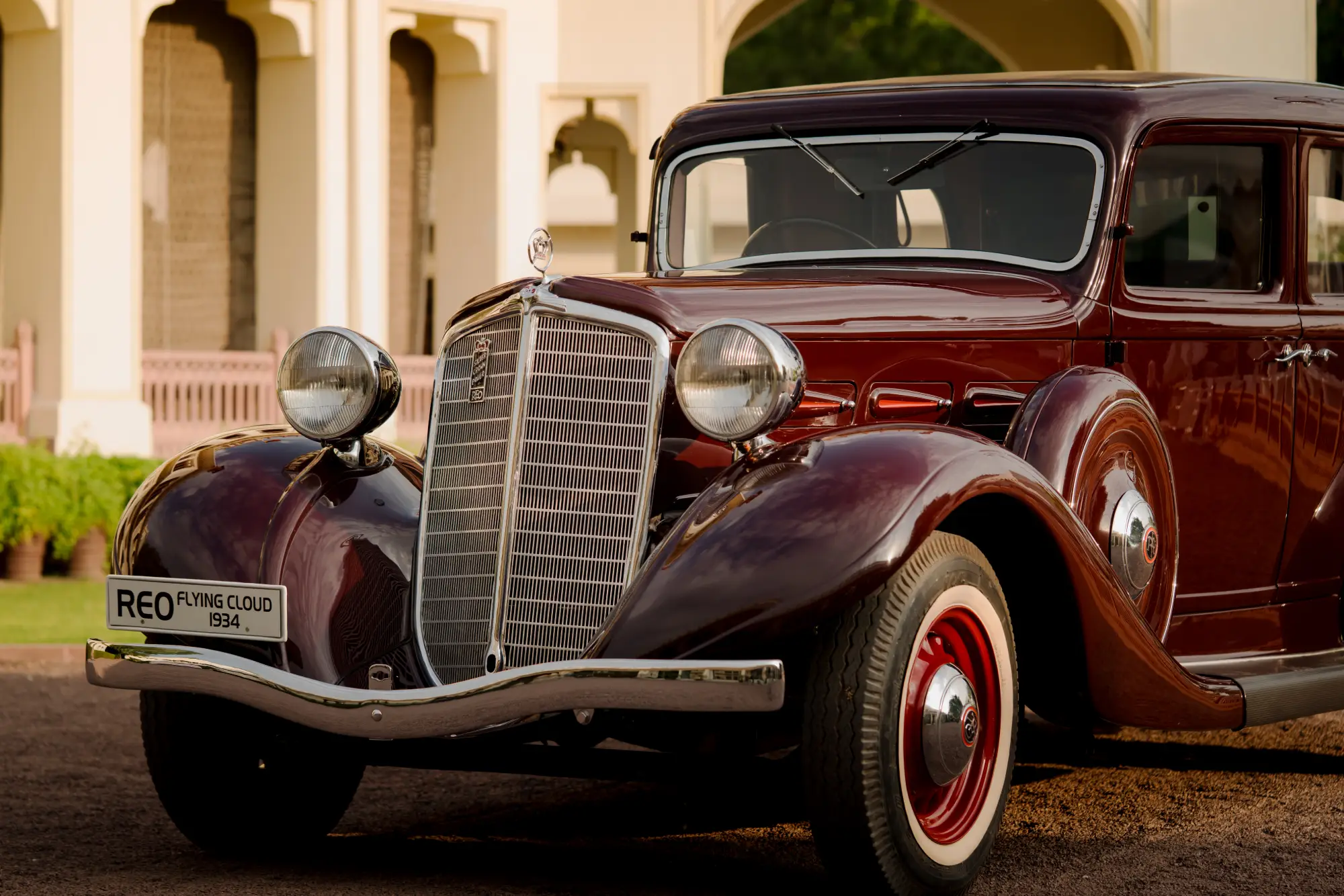
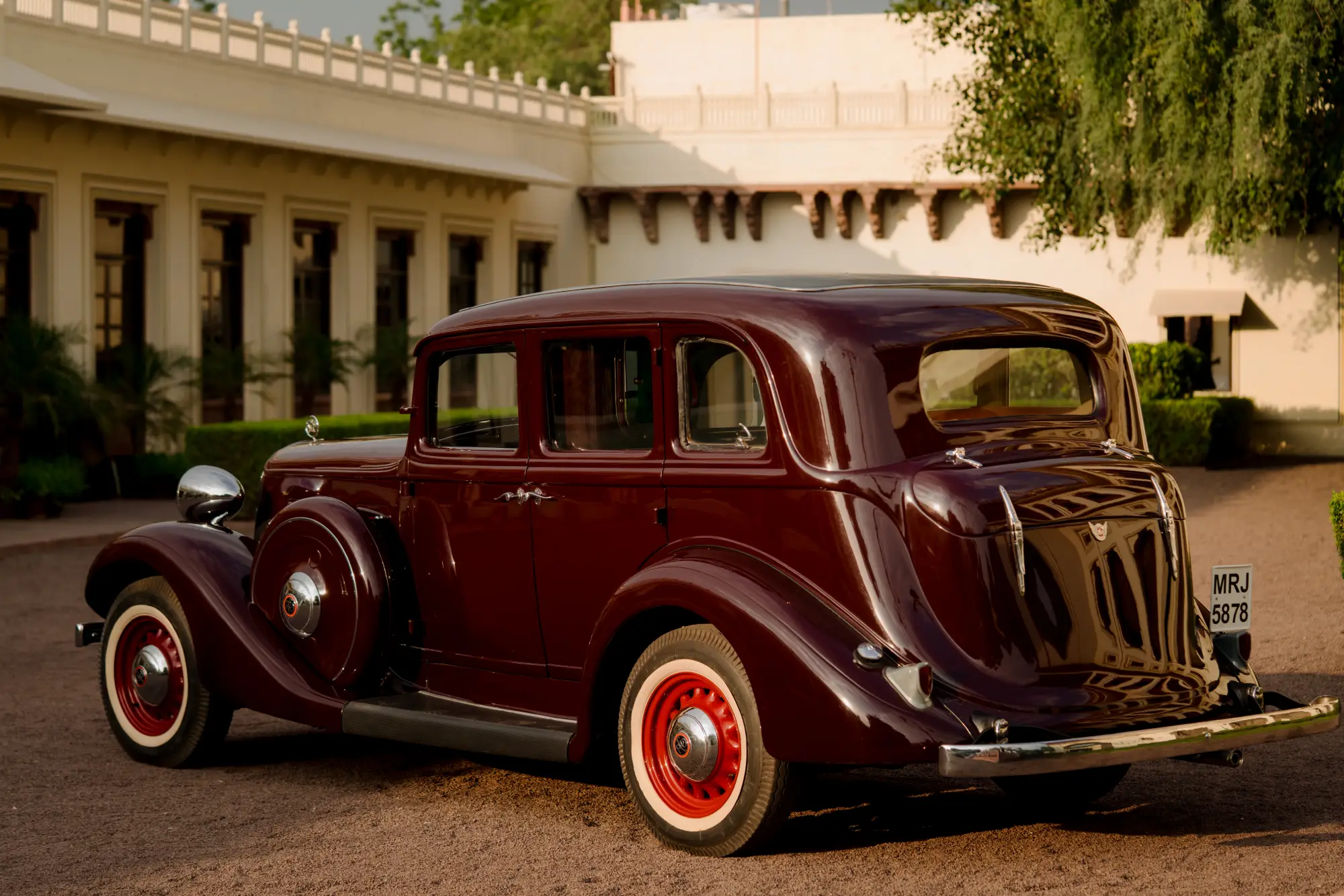
Marque and model history: Renowned American automobile industry pioneer Ransom
Eli
Olds had already achieved success with the Oldsmobile brand that he launched in 1897. As early
as
1905, he left to start another company using his initials R.E.O. to form the REO Motor Car
Company.
Achieving great success at launch, commercial vehicle production was added to the lineup.
The one model that REO is most famous for is undoubtedly the Flying Cloud, launched first in
1927.
What made is special was the name to begin with – never before had such a striking, descriptive
name
been used for a car in America. It was packed with new technologies – it was the first car to
offer
Lockheed’s hydraulic braking system, which would soon go on to become the norm in the industry.
Another innovation was the semi-automatic transmission, dubbed the Self-Shifter.
Provenance: This handsome model was delivered new to the royal state of Rajkot
in
present day Gujarat. It features a partition glass between the driver and passenger compartment.
Inline 6-cylinder 3.8 litre side valve
4 door Sedan
3-speed semi-automatic
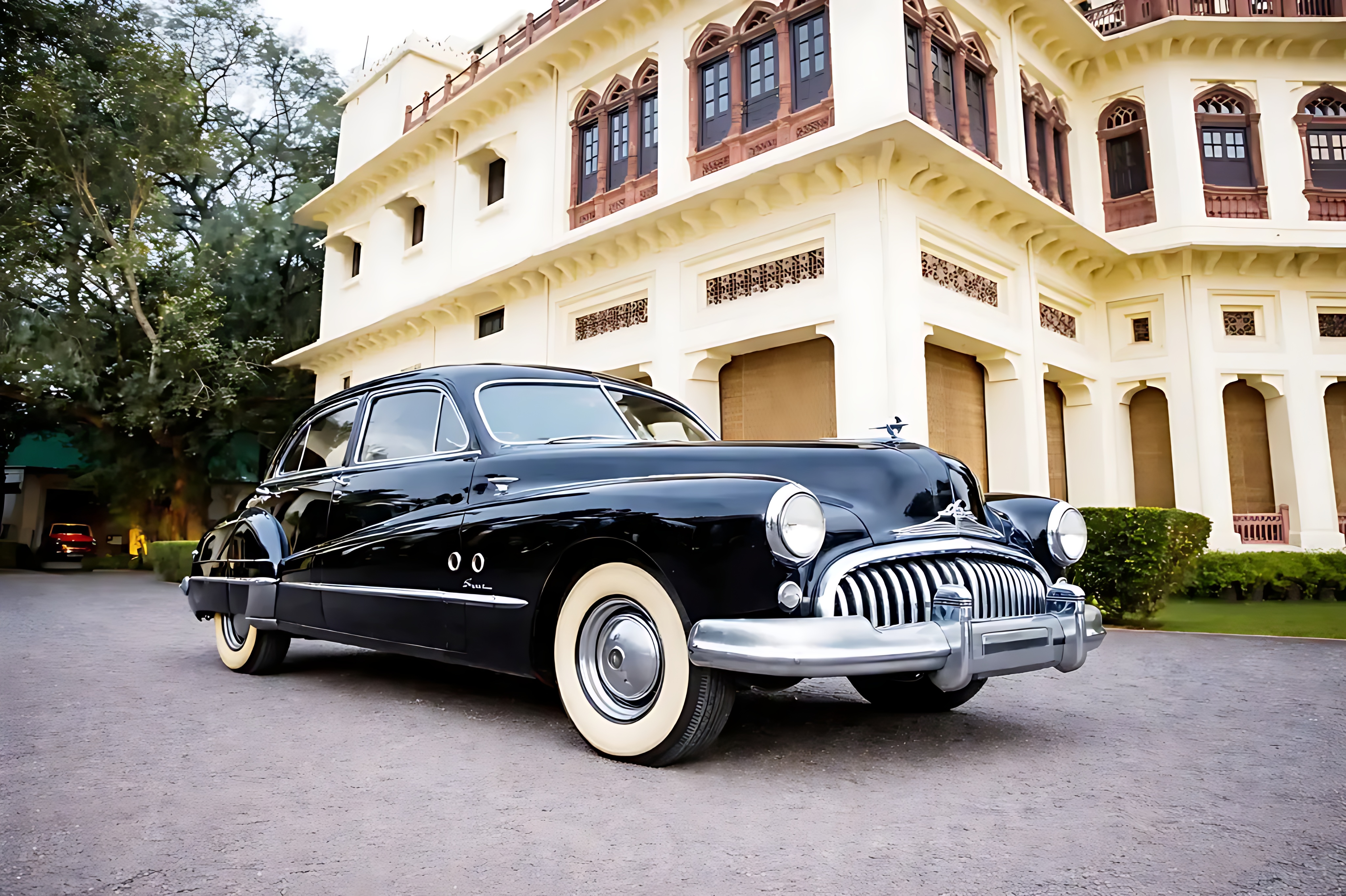
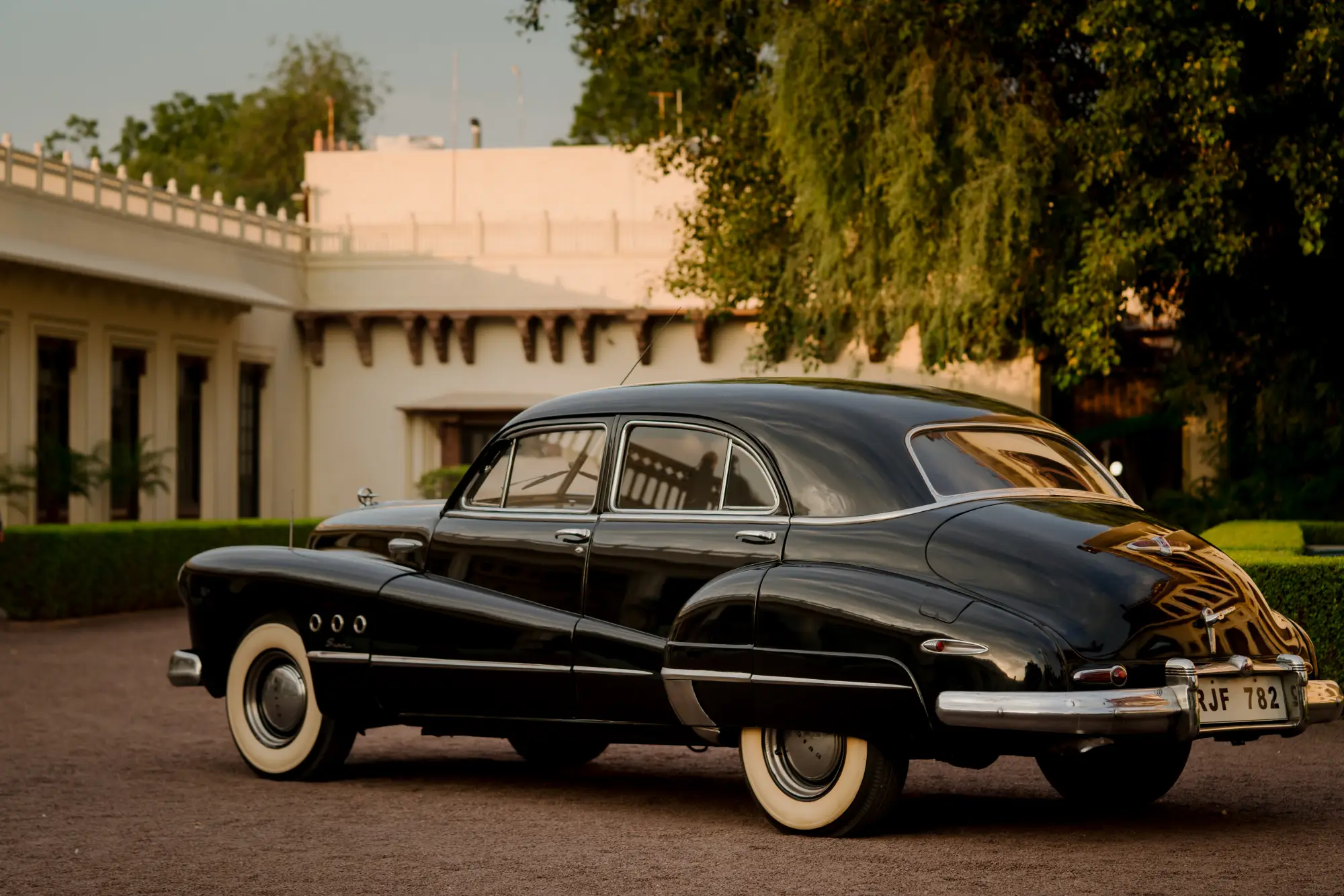
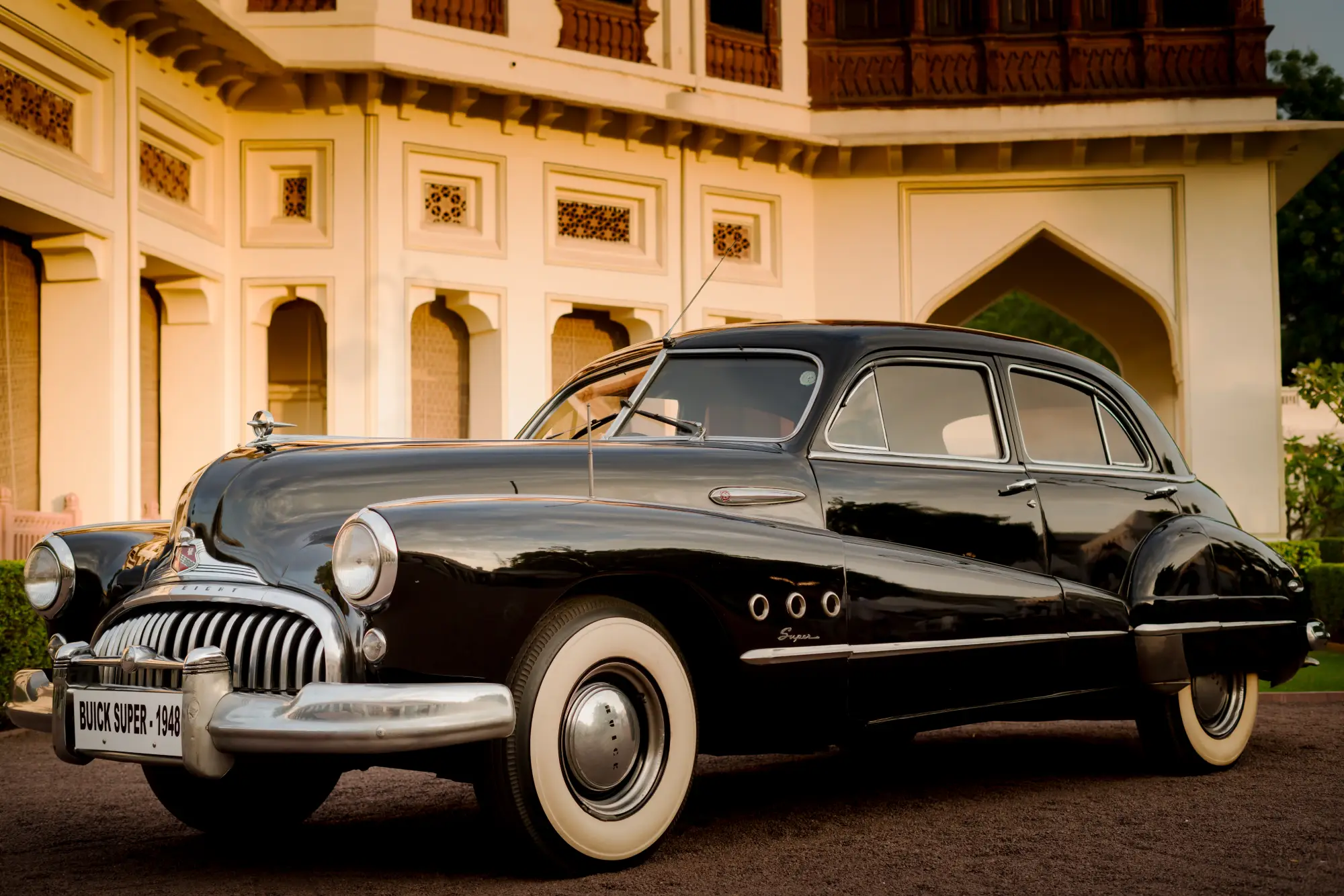
Marque and model history: In the 1930s all Buick cars were named with a number
series, like the Series 40, Series 60 etc. In 1936 a marketing call was made, to rename the
whole
model line with more descriptive and evocative names – Special, Super, Century and Roadmaster.
1946
was the first model year to be launched after the war, with the cars being based heavily on the
1942
model year which was discontinued with the outbreak of WW2. The very stylish, low and flowing
lines
make the 1948 Buick one of the most iconic shapes for the time – the design cues were the
brainchild
of the legendary Harley Earl. As part of a war hangover, a bombsight hood ornament was fitted to
the
front. The engine remained the powerful straight eight, and this was combined with Buick’s
trademark
well-cushioned ride quality.
1947 and 48 were probably Buick’s most successful years in India, and almost every Royal State
had
one in their garages. While the official ceremonial cars were high end European marques, a
reliable
and comfortable American car was mostly used for regular duties.
Provenance: This highly original Super Eight was originally owned by Maharaja
Karni
Singhji of Bikaner.
Inline 8-cylinder 4.0 litre overhead valve
Four door Sedan
3-speed manual
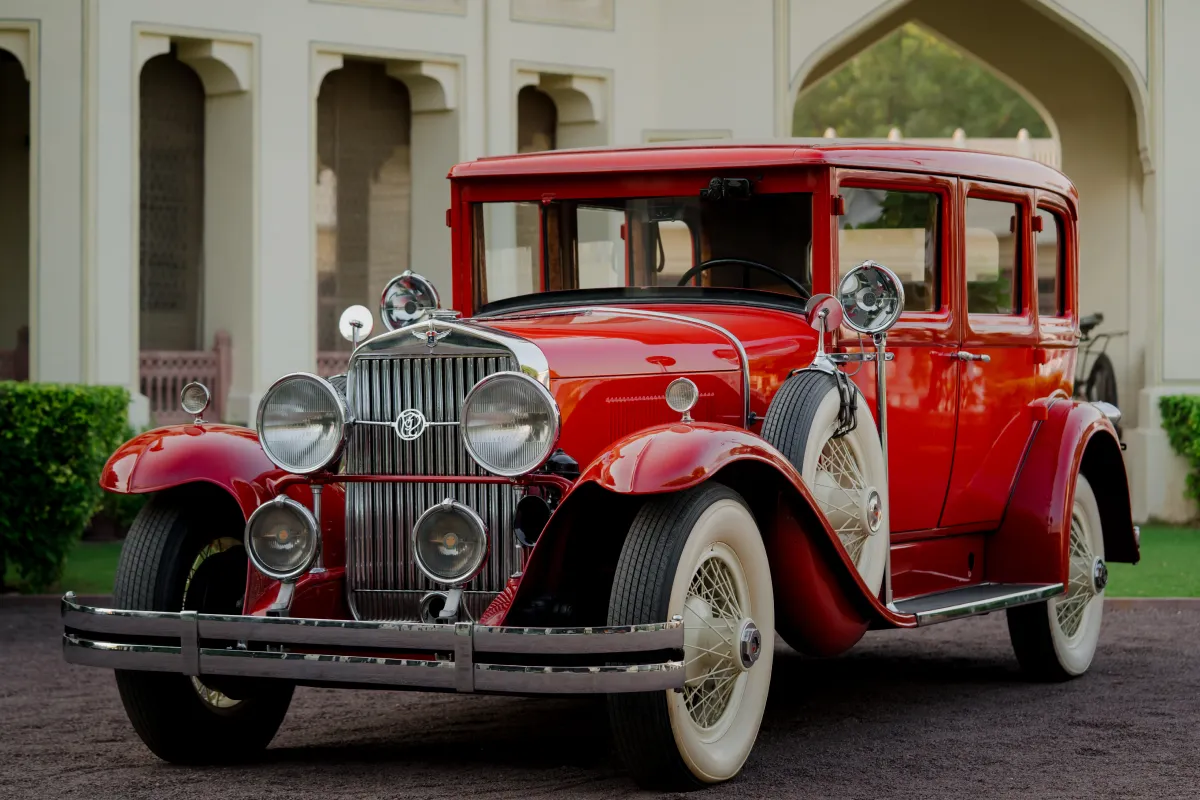
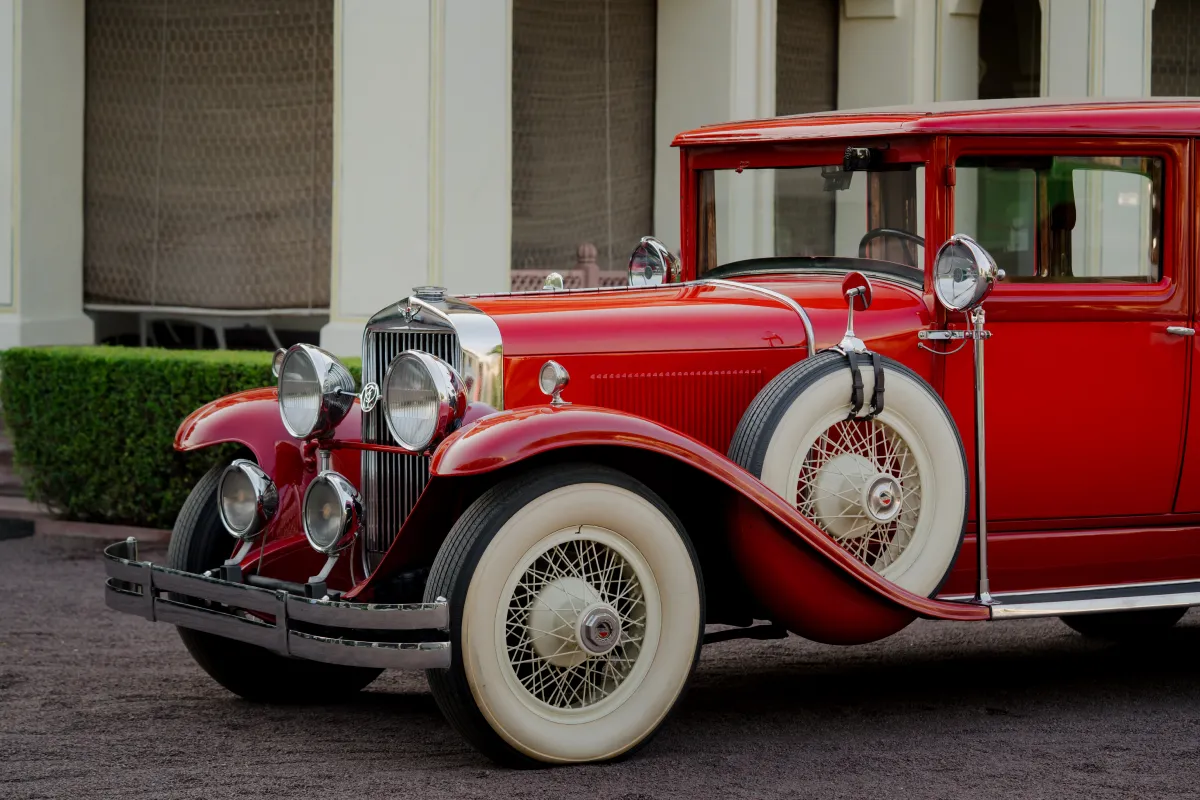
Marque and model history: The LaSalle brand was introduced by General Motors in
1927. It was envisaged as a sister brand to Cadillac in a bid to ensure a GM product is
available at
every price point from entry level to luxury. The name was chosen after a French explorer, just
as
was done years earlier for Cadillac. This successful badge engineering was credited to GM’s top
boss
Alfred P Sloan, while another big name, Harley Earl, was responsible for styling. The brand was
eventually dropped after the 1940 model.
LaSalle cars were similar to Cadillac in most respects including build and the powerful V8
engines,
but being slightly smaller, they undercut Cadillac pricing, making them the second most
prestigious
brand in the lineup. For 1929 a staggering number of options and bodystyles were available,
numbering
almost twenty. Bodies were mainly built by the popular options of Fisher and Fleetwood. Our
featured
car is a Family Sedan by Fisher, built on the longer 134” wheelbase and remains in excellent
condition.
V 8-cylinder 5.4 litre side valve
Four door Sedan
3-speed manual
Marque and model history: The Pontiac brand was introduced in 1925 as a sister
brand to the well established Oakland range of cars, which it replaced entirely by 1933. Named
after
the famous native American Indian Chief, the logo reflected the native American headdress. The
brand
remained popular in the United States for decades, until it finally ceased to exist in 2010
after
battling financial difficulties.
For 1933 the Pontiac was available only with the 8 cylinder engine – a notable advantage over
cousin
Chevrolet’s 6.
Bodystyles built by Fisher included two-door Sedan or Coach, Standard, Sport and Convertible
Coupés,
a Roadster, Four-door and Touring Sedan. Prices were kept very competitive, yet the new styling
was
regarding as modern and streamlined – a notable feature were the ‘speed-lines’ stamped into the
fenders. Along with an impressive list of standard equipment, as options one could even add
accessories like a heater, a cigar lighter, a clock and a even a radio. A staggering 22 colour
combinations were available.
The survival rate for 1933 Pontiacs in India is very low, just two cars are known to exist
currently, and the car on display has been painstakingly restored to excellent running
condition.
Inline 8-cylinder 3.6 side valve
Four door Tourer
3-speed manual
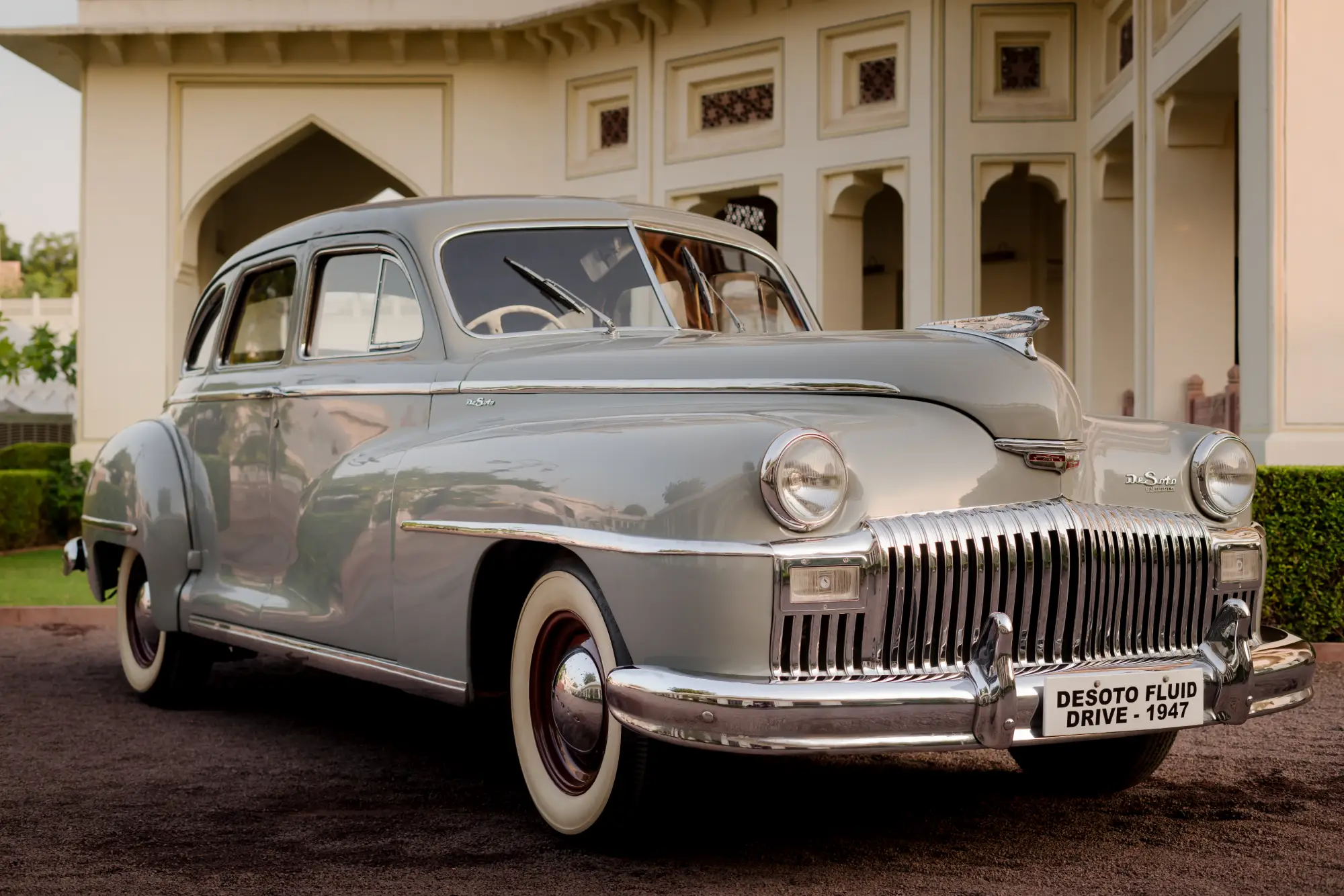
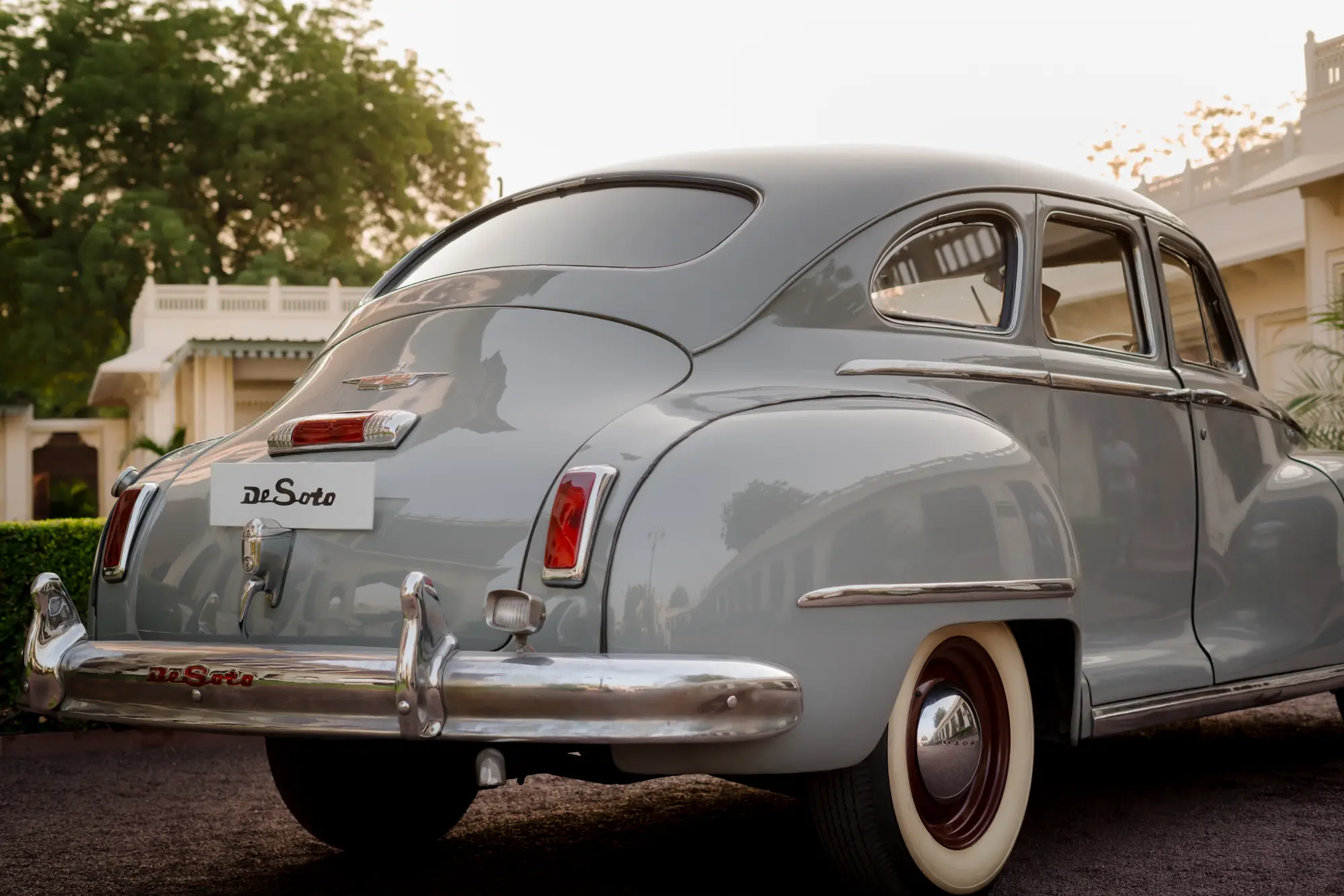
Marque and model history: The DeSoto division of the Chrysler Corporation was
created by Walter P. Chrysler in 1928 as the mid level offering in the group. The marque was
named
after the Spanish explorer Hernando de Soto, who’s image appeared in the car logo as well.
Positioned
above the entry level Plymouth brand, over the years it shared its mid-range price strategy with
the
popular Dodge brand.
Post World War II, most American manufacturers re-introduced the last built 1942 models with
minor
updates, and so did DeSoto. Offered in Deluxe or the more luxurious Custom trim, body styles
included convertibles and a two or four door hardtop of varying wheelbases including a
limousine. The
Custom was fitted with Chrysler’s ‘Fluid Drive’ semi-automatic transmission. Other luxury
features
included new materials like plastic for some of the trim, besides standard equipment like a
cigarette lighter, two speed electric wipers and foam rubber seat cushions. These models were
introduced in India by the Walchand Hirachand’s Premier Automobiles Limited in Bombay.
Provenance: This beautifully restored DeSoto was originally owned by a senior
judge
in West Bengal, and has been lovingly restored to totally original condition.
Inline 6-cylinder 3.9 litre side valve
Four door Sedan
Semi-automatic Fluid Drive
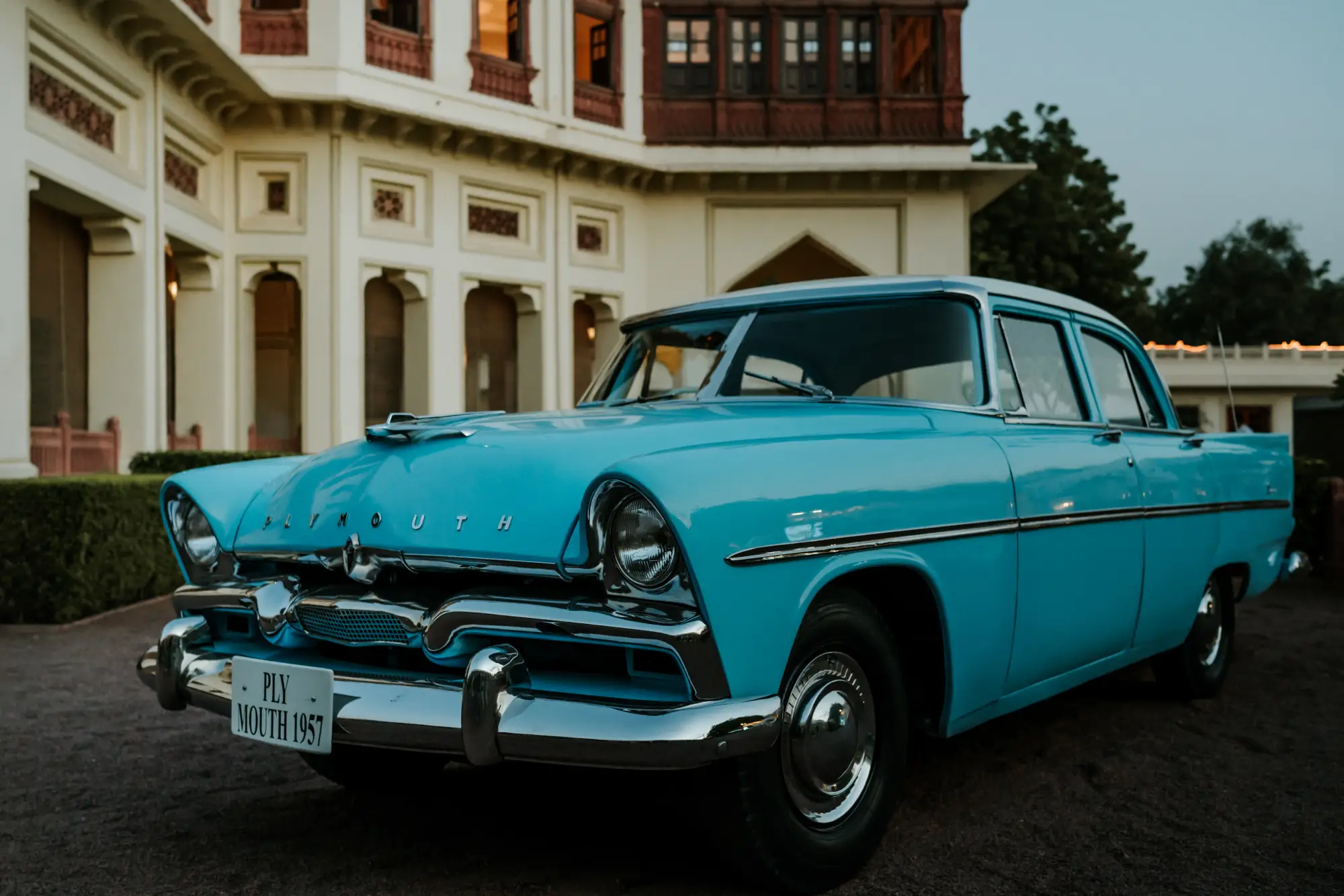
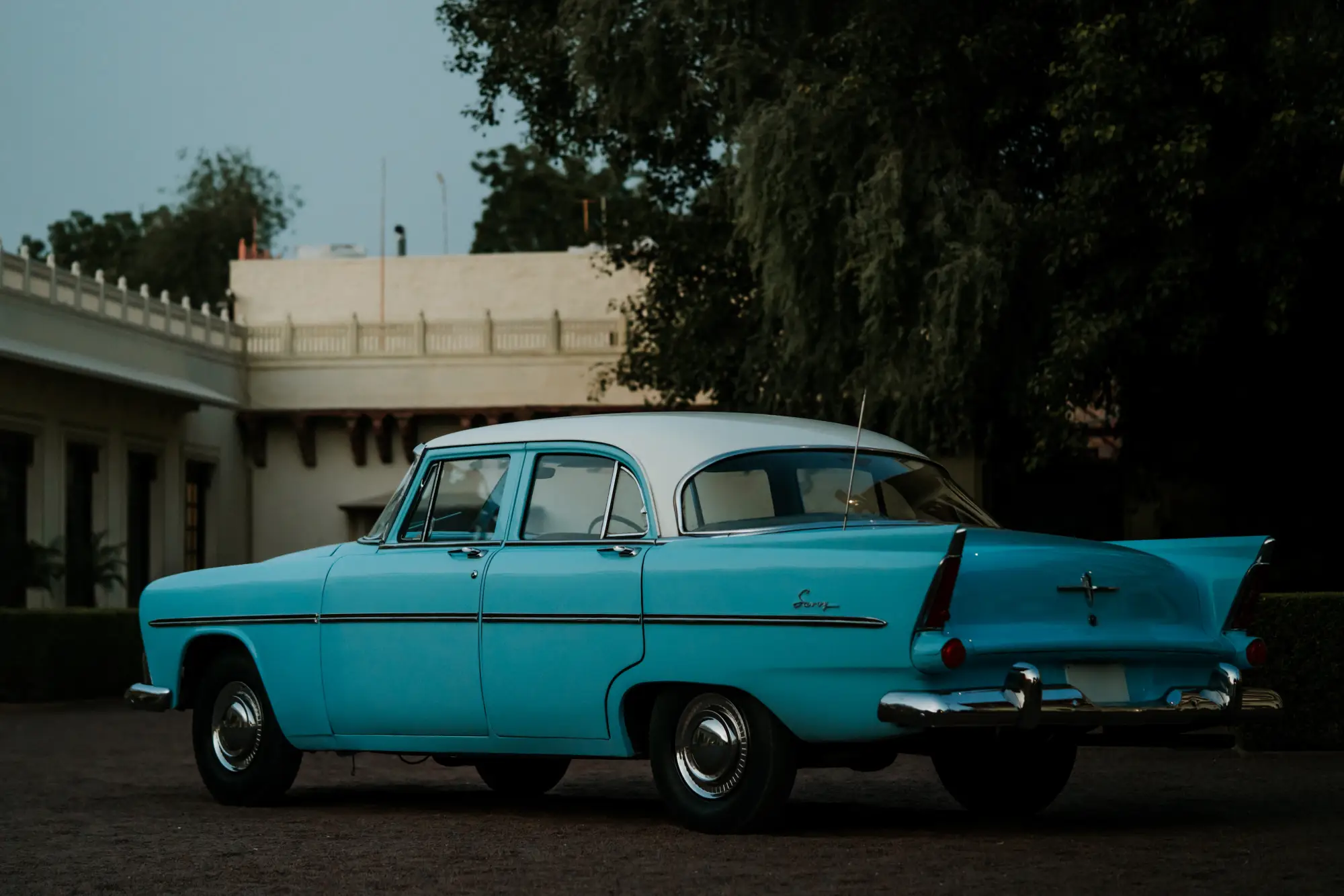
Marque and model history: The Chrysler Corporation was created by Walter P.
Chrysler in 1925 and he soon added brands under the Chrysler umbrella to cater to a variety of
buyers. In 1928 the entry level Plymouth brand was formed, targeting the low priced segment that
competed with Ford and Chevrolet. Offering high levels of equipment and excellent quality with
economical pricing, Plymouth cars proved very popular.
The Chrysler Corporation cars were sold in India via Walchand Hirachand's Premier Automobiles
Limited
in Bombay. For the mid 1950s models Dodge, DeSoto and Plymouth cars were sold simultaneously
with
minor cosmetic differences essentially badge engineered versions of the Plymouth Savoy. Like its
other
sister models the Belvedere and Plaza, the names were chosen from leading luxury hotels of the
time.
Dodge, Plymouth and DeSoto sedans were especially popular with India's wealthy industrialists
and
businessmen.
Our car is finished in a pleasing light blue and white, a very typical colour combination of the
time.
Inline 6-cylinder 3.7 litre side valve
Four door Sedan
3-speed manual
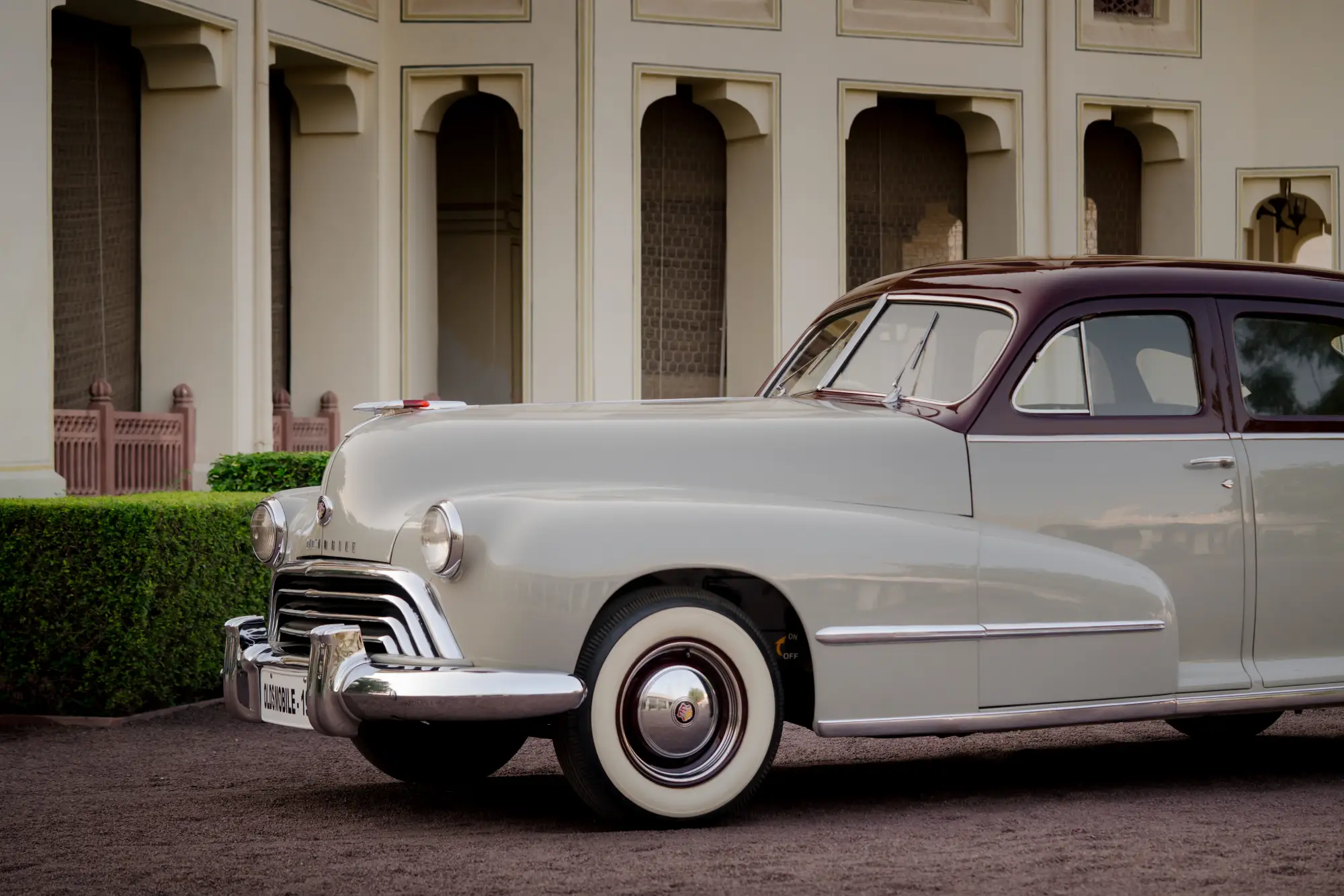
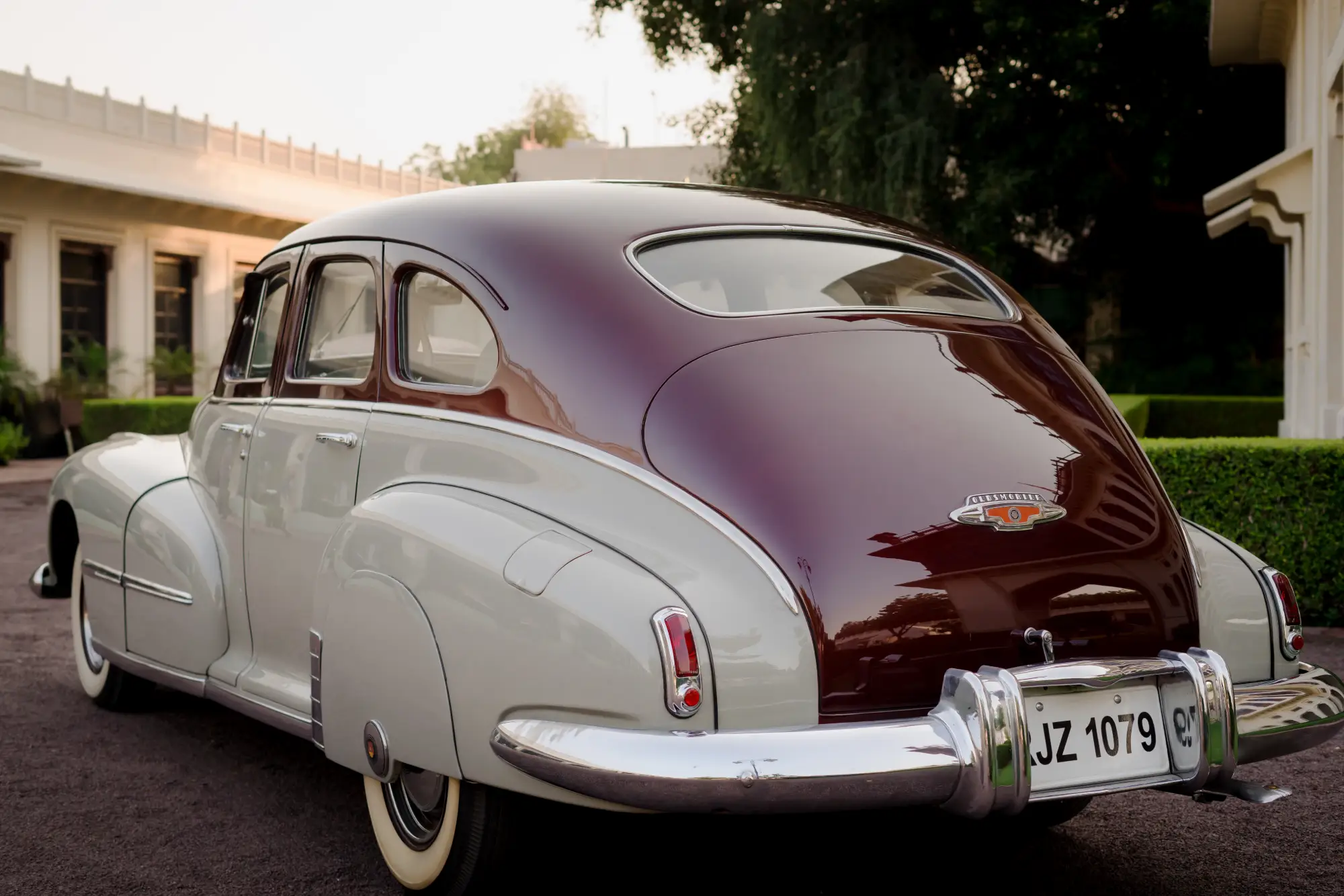
Marque and model history: With origins going back to 1897, Oldsmobile can
proudly
claim to be one of the oldest automotive marques in the world, founded by the pioneer Ransom Eli
Olds. His first popular model was the ‘Curved Dash’ launched in 1901, which had the honour of
being
the first mass-produced automobile in the world, as well as the first set of cars to be owned by
Indians. Oldsmobile cars always had the distinction of offering many firsts to the market –
amongst
them a speedometer in 1901, the standard windshield in 1915, and the first fully automatic
transmission in 1938.
The 1948 Oldsmobile Series 60 was offered in various bodystyles, with power from General Motor’s
tried and tested side valve six cylinder engine mated to a three speed manual transmission or an
optional four speed hydramatic automatic transmission. Standard equipment included all round
coil
spring suspension, safety glass, dual horns and even a cigarette lighter.
Provenance: This very authentic sedan was previously owned by Rao Raja Rajender
Singhji of Uniyara, and has covered very low mileage. It remains totally original and in
showroom
condition, even down to its original two tone colour combination.
Inline 6-cylinder 3.9 litre side valve
Four door Sedan
3-speed manual
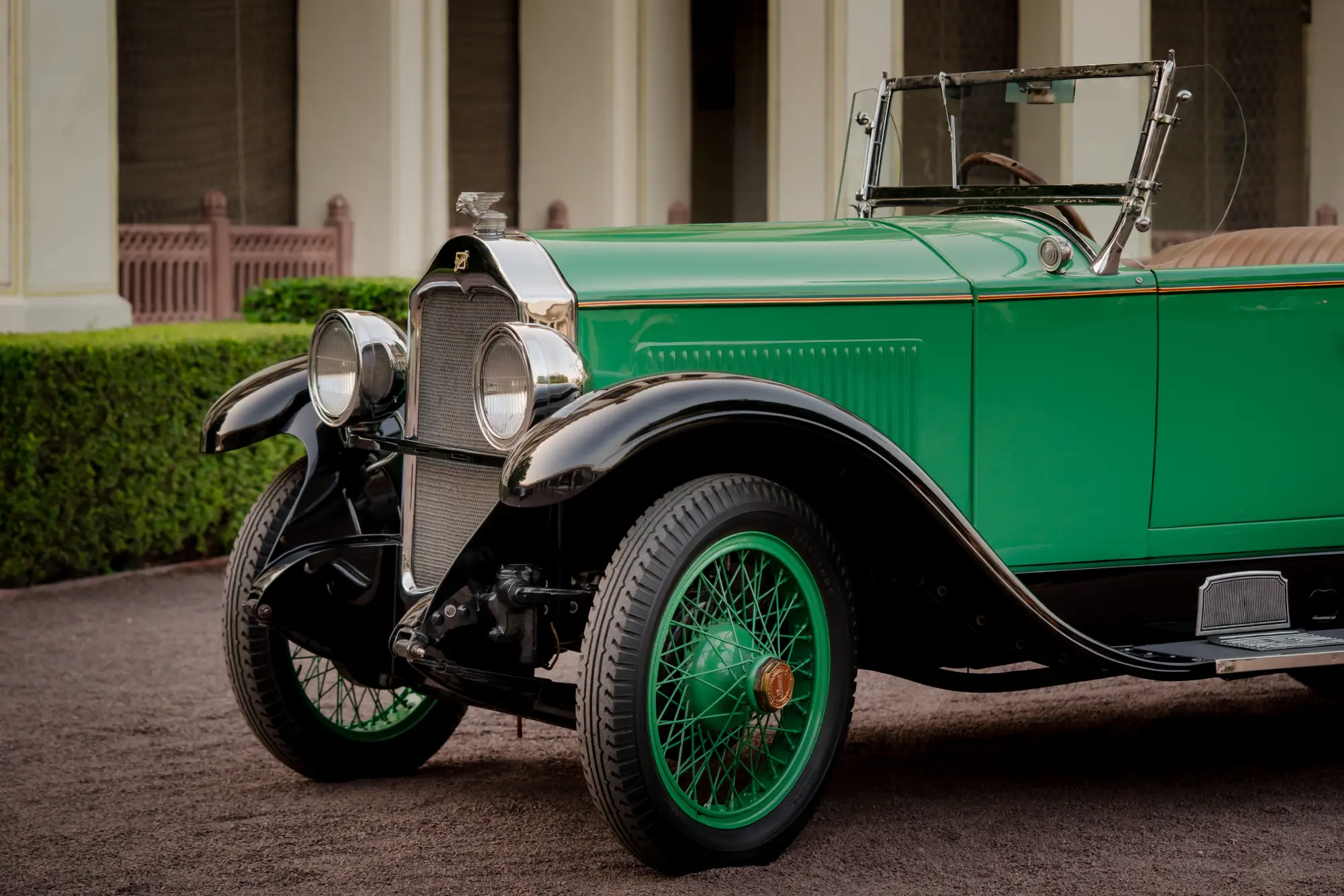
Marque and model history: Buick bears the distinction of perhaps being
America’s
oldest functional car manufacturer in existence, with origins back to 1899. It predates even
General
Motors, which ironically went on to be a parent brand. Founded by David Dunbar Buick, he left
the
company that bore his name by 1906. Buick cars were always positioned at the more premium end of
the
spectrum under General Motors umbrella of popular brands, sitting above brands like Chevrolet
and
Pontiac, but below Cadillac. By the 1920s, they had earned a reputation of providing the perfect
cars for higher ranking working professionals and businessmen. Right upto 1930, Buick was
offering a
straight six-cylinder engine configuration with ‘valve-in-head’ construction, a design pioneered
by
Buick. To advertise the car’s durability, in 1925 a Touring Sedan was driven all over the world,
going from dealer to dealer. The car (advertised as the Chota Six) reached the TR Pratt Bombay
showrooms successfully on the 21st of February 1925.
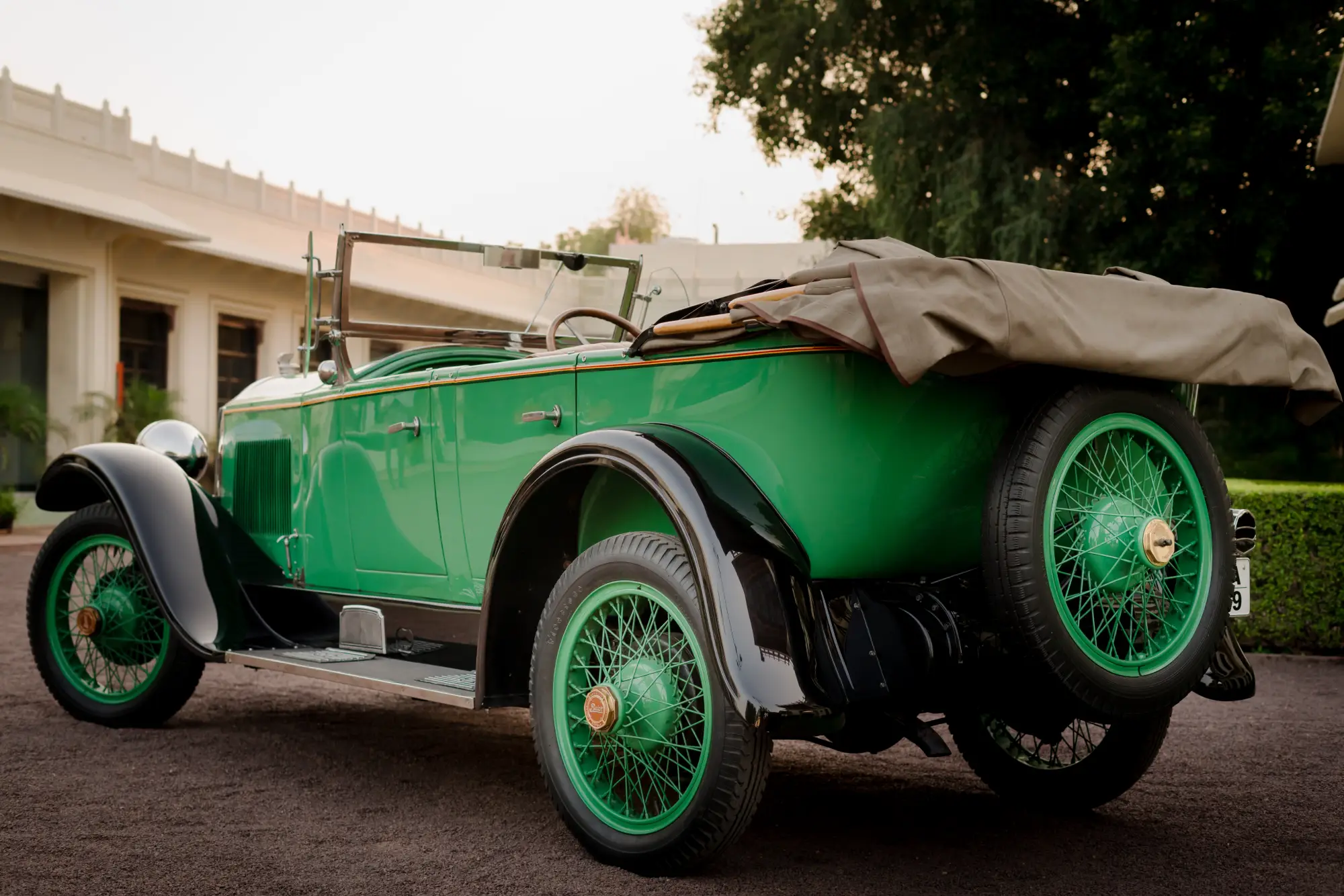
Provenance: This rare Buick was originally owned by the aristocratic Banaili
Raj
estate in the Purnia district of Bihar. In totally derelict condition with many missing parts,
the
car has been painstaking restored and even dons the correct colour scheme of Trail green over
black
fenders.
Inline 6-cylinder 3.4 litre overhead valve
Four door Tourer
3-speed manual
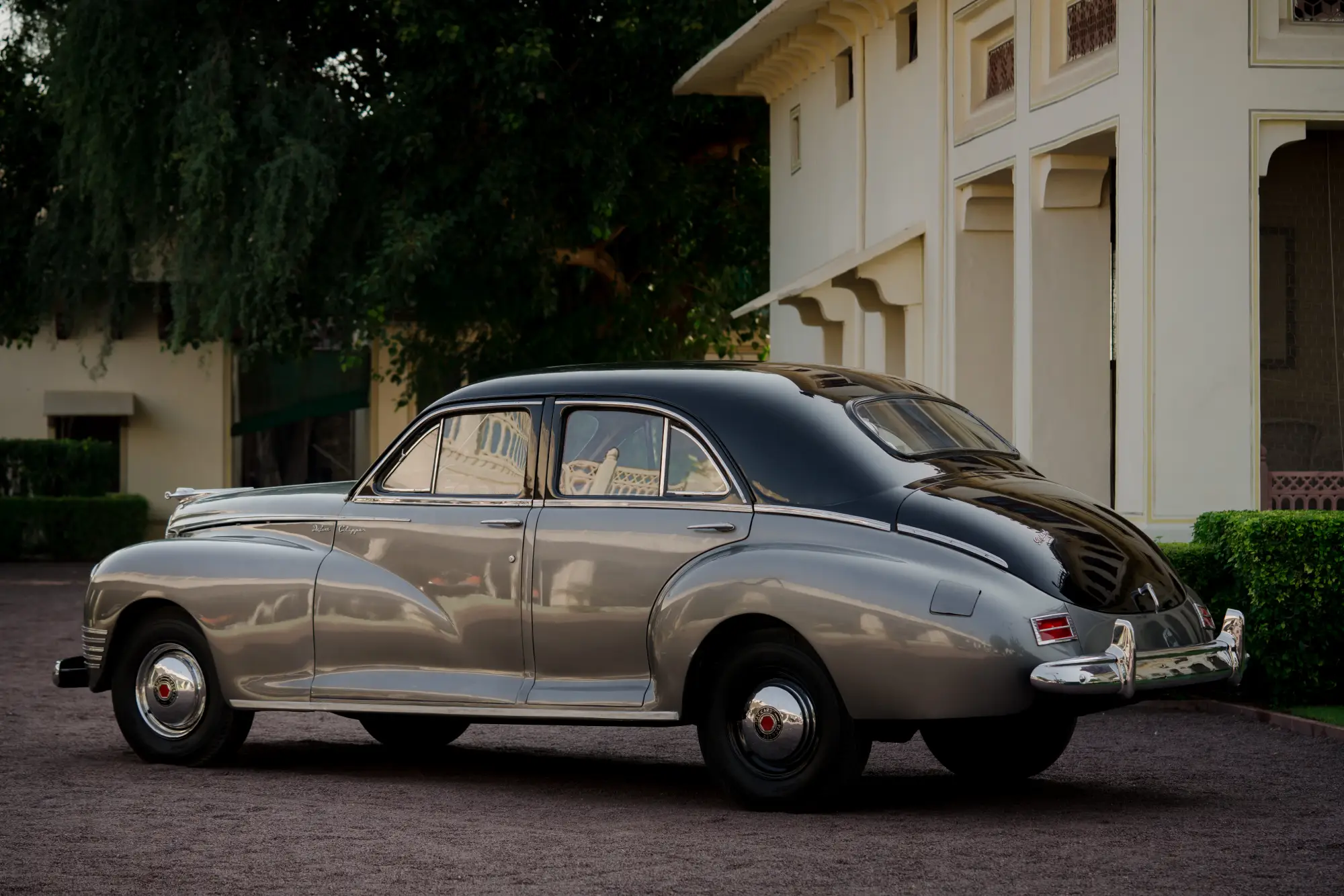
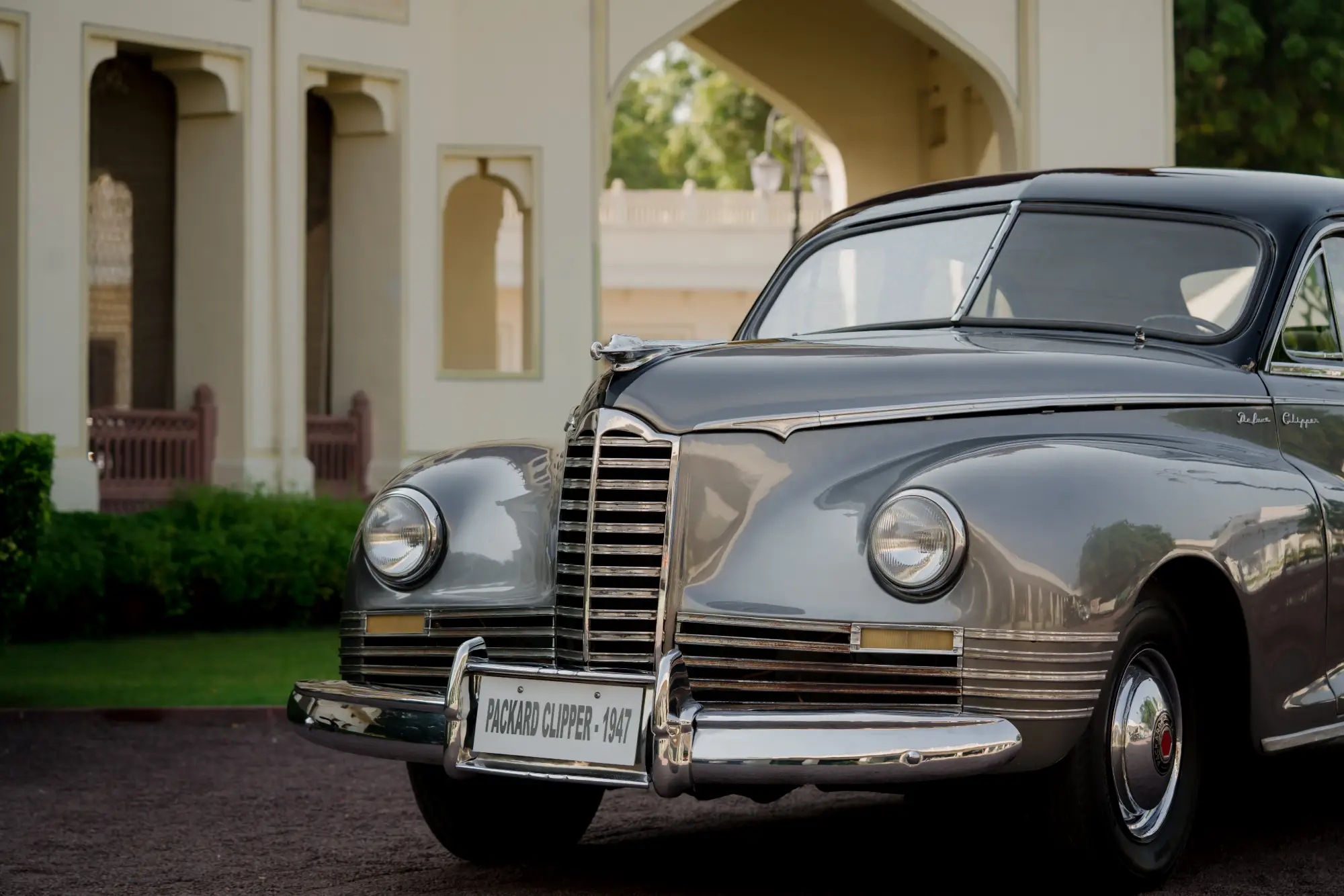
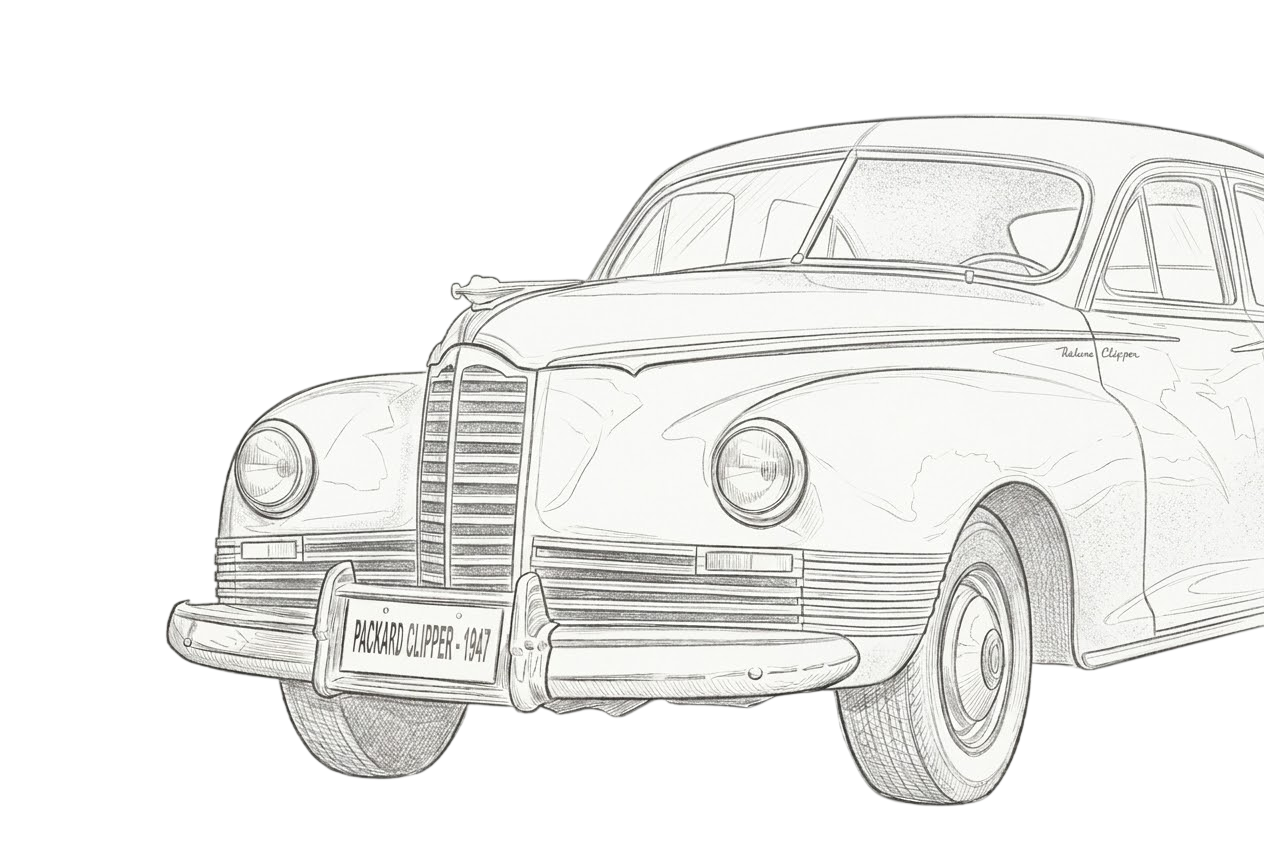
Marque and model history: The Packard Motor Company was founded in 1899, and
their
models are widely considered to be amongst America’s best built luxury automobiles. At the
forefront
of innovation, Packard introduced many firsts in their production cars including the modern
conventional steering wheel and air conditioning in a passenger car. Their famous advertising
slogan
was confident and memorable – ‘Ask the man who owns one’. By 1954 they merged with Studebaker to
form the Studebaker-Packard Corporation.
First launched in 1941 as an all new model, production soon ceased with the advent of World War
II.
The striking design is attributed a large team including the famous design consultant Howard
Darrin.
Streamlined and graceful, the design featured thin pillars offering excellent visibility.
Production
resumed after the war for the 1946 models, offered with an inline six or eight cylinder side
valve
engine, both known for their silent and refined operation.
Packard’s presence in India goes back to the early years, with their models being popular with
wealthy buyers nationwide. The cars were distributed across India by Bombay-based Dadajee
Dhackjee.
Inline 6-cylinder 4.0 litre side valve
Four door Sedan
3-speed manual
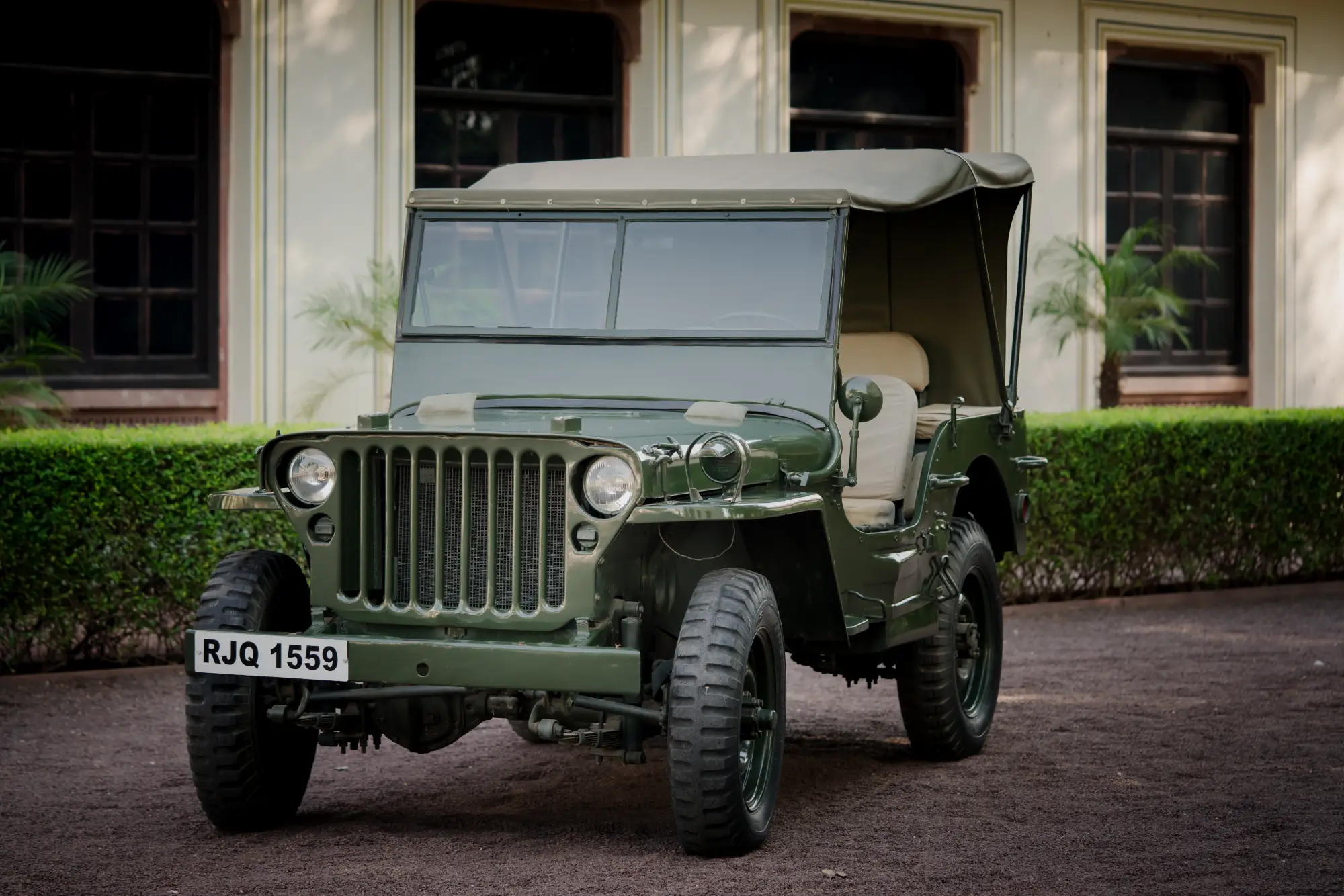
Marque and model history: The GPW was built under license to a design from
Willys
created specially for World War II as a Command Reconnaissance vehicle. In the name GP stood for
General Purpose, and it is believed the W was for Willys. Over time GP was shortened to just
‘Jeep’.
It was so successful in the war effort, that the American President Eisenhower called it "one of
three decisive weapons the U.S. had during WWII.” Indeed it was one of the most important
milestones
in automotive history.
Being the first mass produced four wheel drive light vehicle, the Jeep’s go anywhere capability
made
it the perfect choice for remote towns across India. Where roads were few and far between, its
rugged
nature and reliable performance made for the perfect vehicle of choice. With almost 650,000
units
built, a large number were exported to serve the world over, and India was one of these markets.
Provenance: This original GPW was originally owned by Maharaja Ajeet
Singhji of Jodhpur
Inline 4-cylinder 2.2 litre side valve
Jeep
3-speed manual
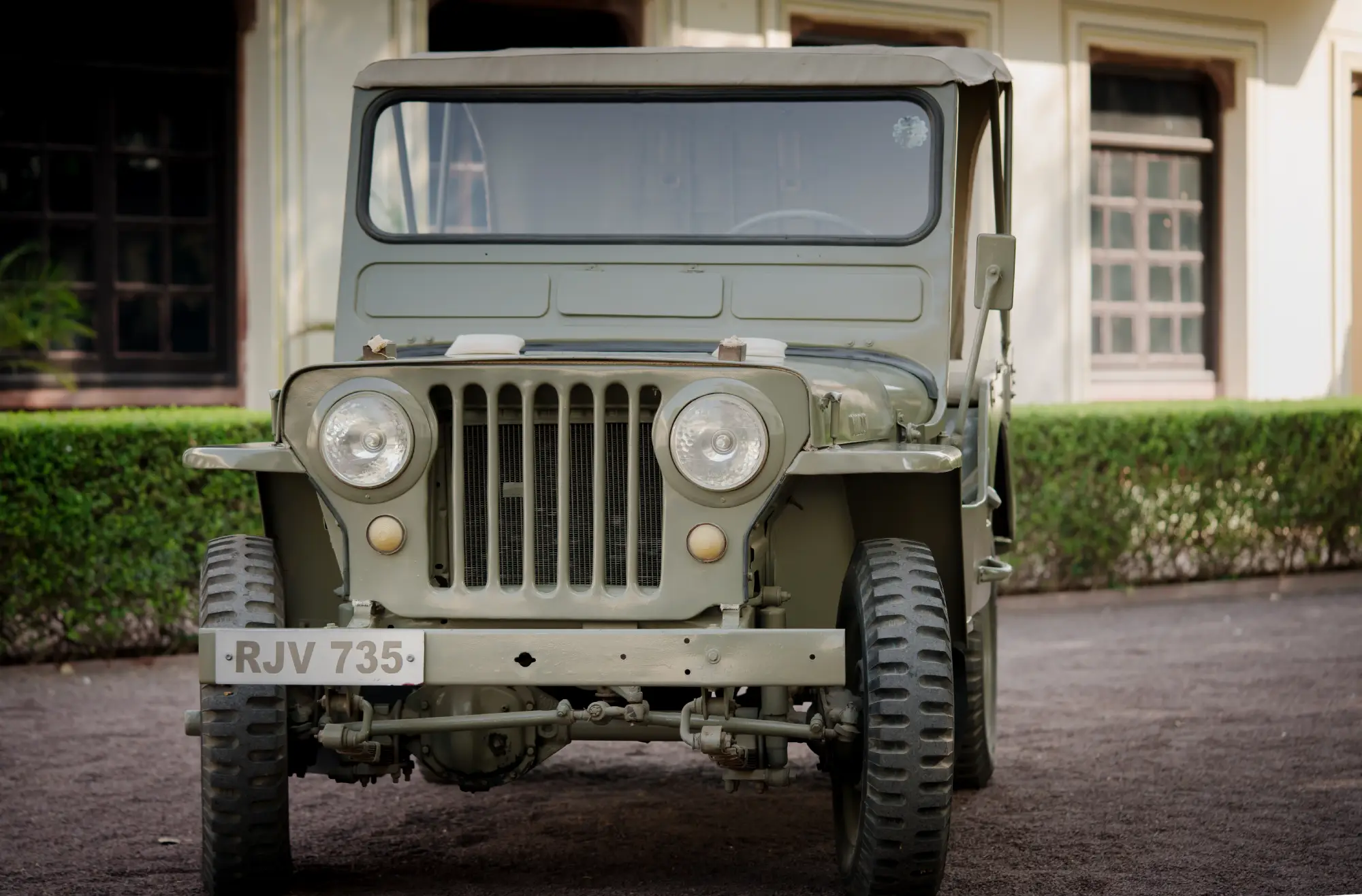
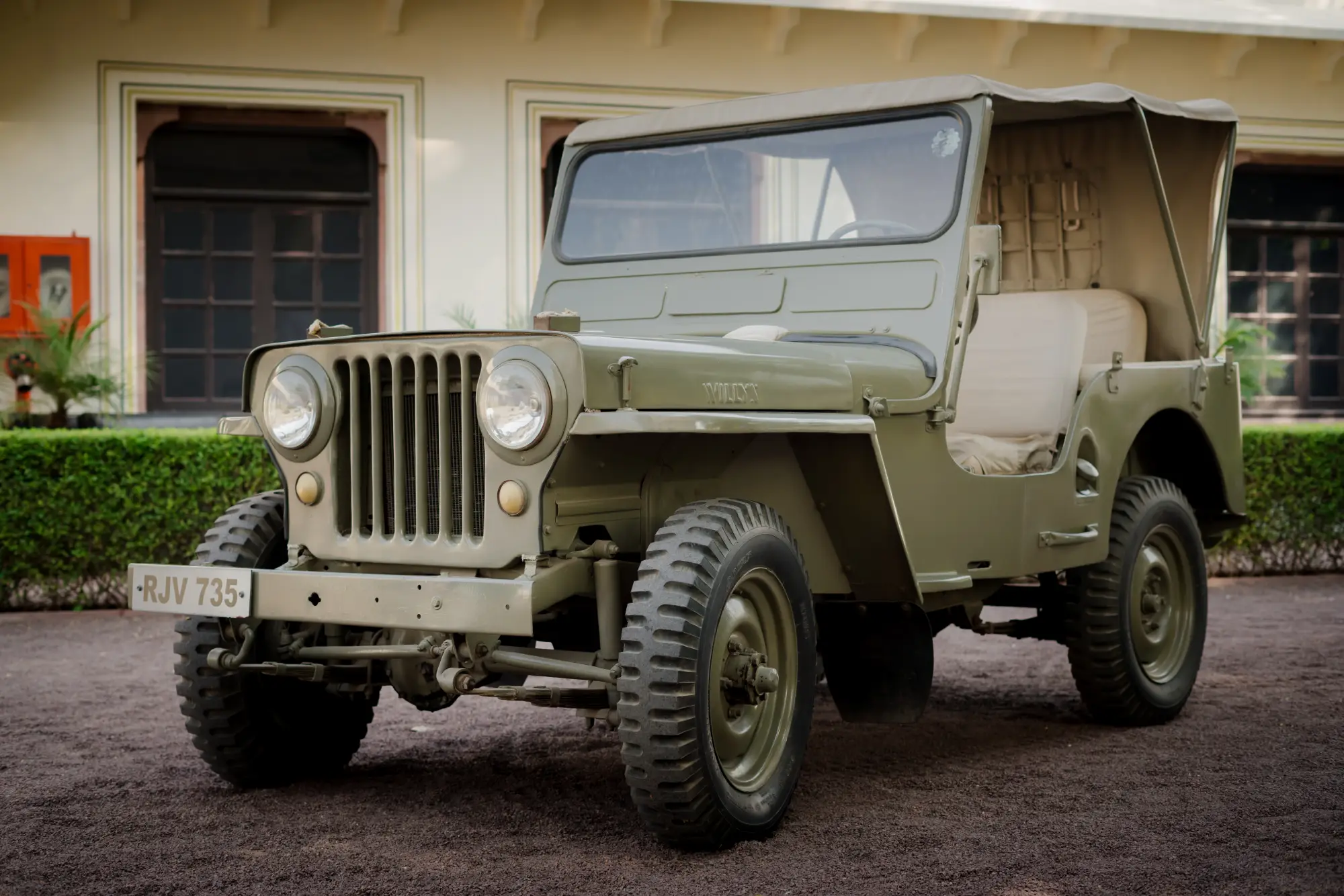
Marque and model history: Originally designed and built for combat in World War
II,
the Willys MB and Ford GPW Jeeps had proven their capabilities, and maker Willys-Overland
already
started work on the successor civilian model. Called the CJ or Civilian Jeep, the car bore close
resemblance to its war time predecessor, sharing many components. The most prominent visual
differences for the CJ2A were the larger inset headlights, and a seven slot front grille.
Offered
with a variety of accessories, the CJ could be specified with items such as PTO winches, snow
plows
and even agricultural application fittings. By 1949 the successor model was launched, the CJ3A
with
improvements to the suspension and a one piece front windscreen.
In 1953 the next model was launched, the CJ3B which went on to become One of the most successful
Jeep
models in the country with production running into decades. A new overhead valve ‘Hurricane’
engine
was introduced, which necessitated an increase in the bonnet height, giving it the name ‘high
bonnet’. Mahindra & Mahindra continued to make versions of this model for decades.
Inline 4-cylinder 2.2 overhead valve
Jeep
3-speed manual